November 23, 2026 - by CSCS
The 20th edition of the competition, held as part of the world's largest high-performance computing (HPC) conference, challenged student teams to build and optimize a small, self-designed computer cluster, delivering the best possible performance within a strict 10 kW power limit.
Over 48 intense hours, the students ran a series of benchmarks, including HPL, HPL-MxP and MLPerf, as well as scientific applications such as the Weather Research and Forecasting (WRF) model and the Multi-component Flow Code (MFC). Their challenges also included a mystery coding task involving the quantum eigensolver ValQyriE, discussions with application developers, and the preparation of scientific reports documenting their results.
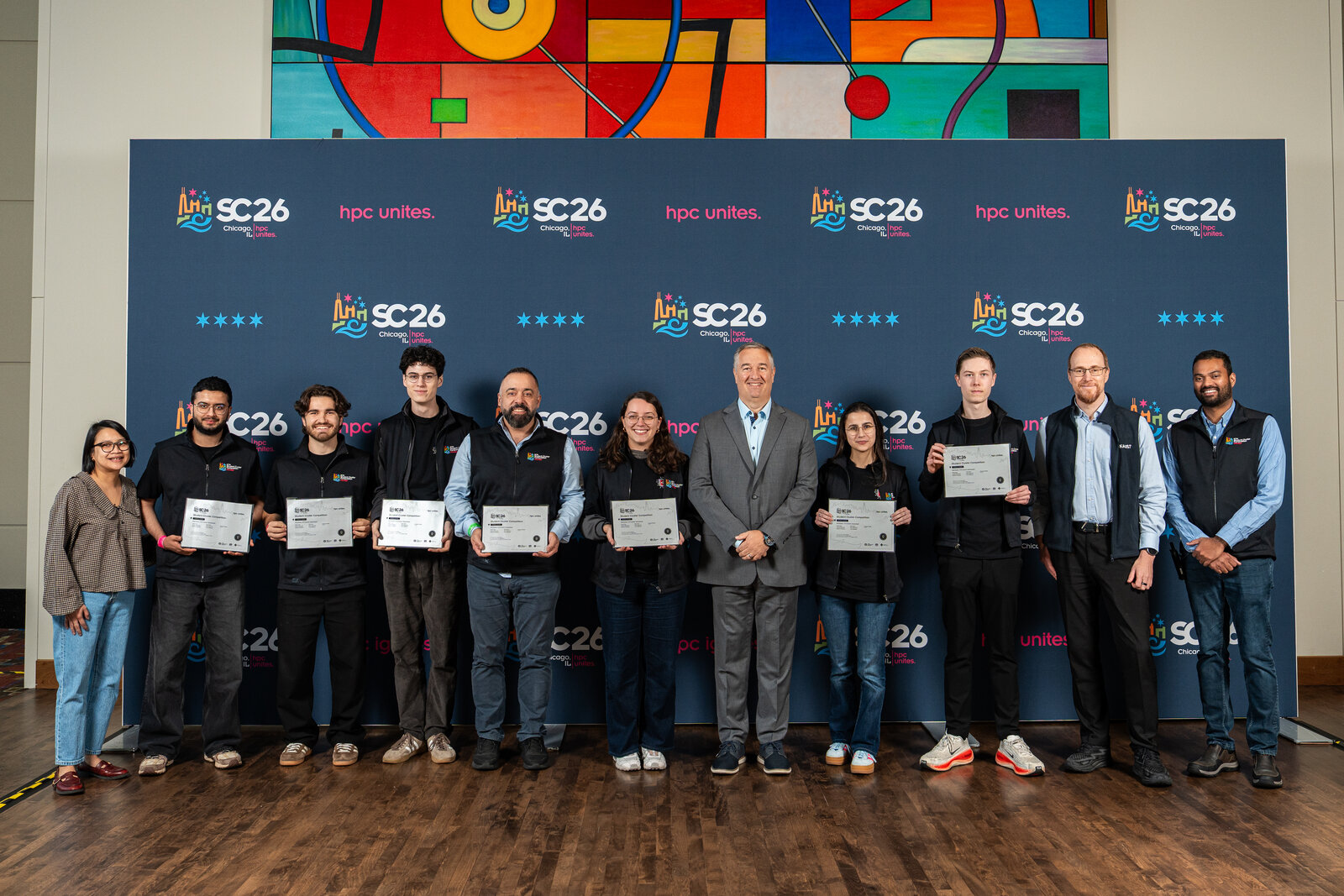
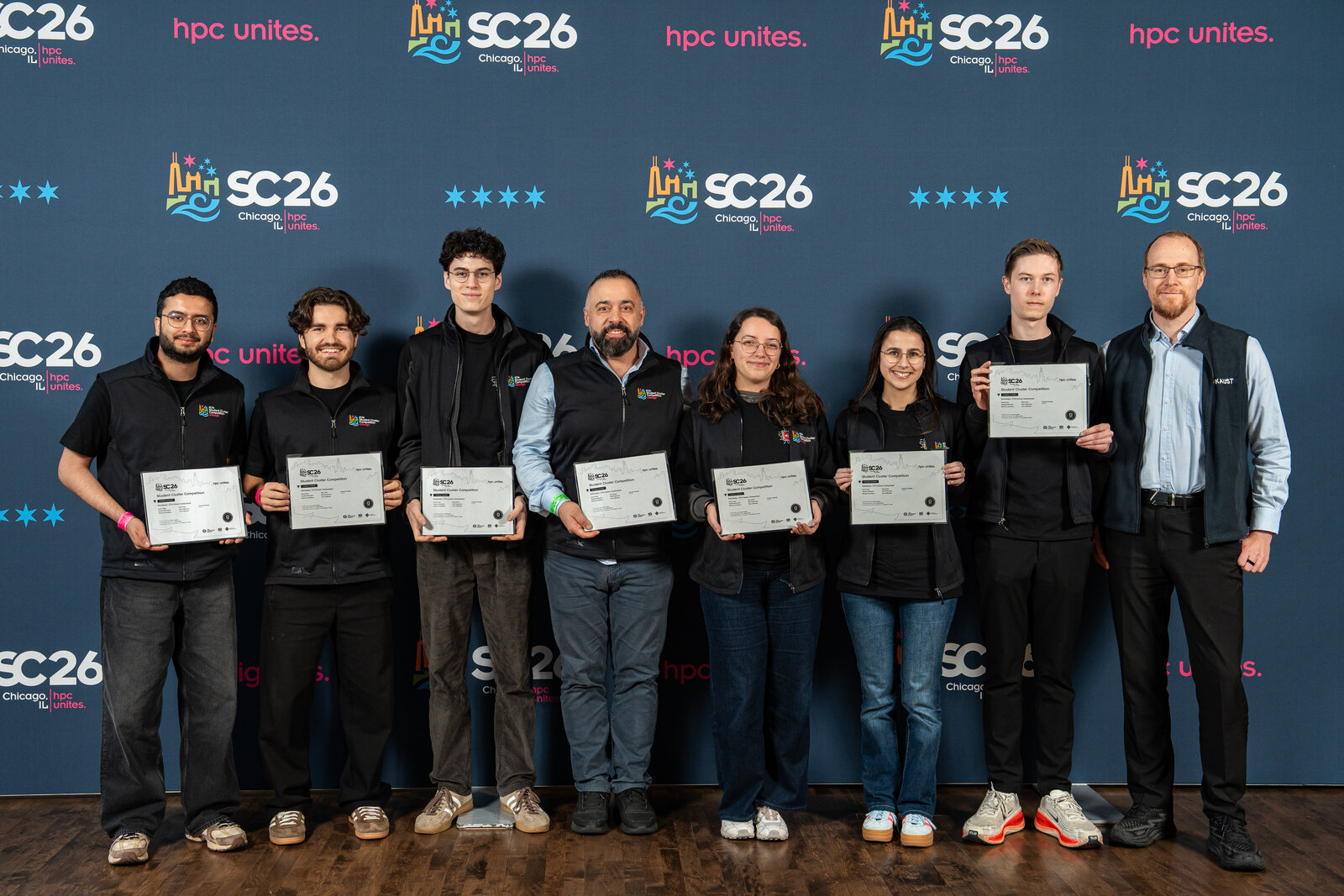
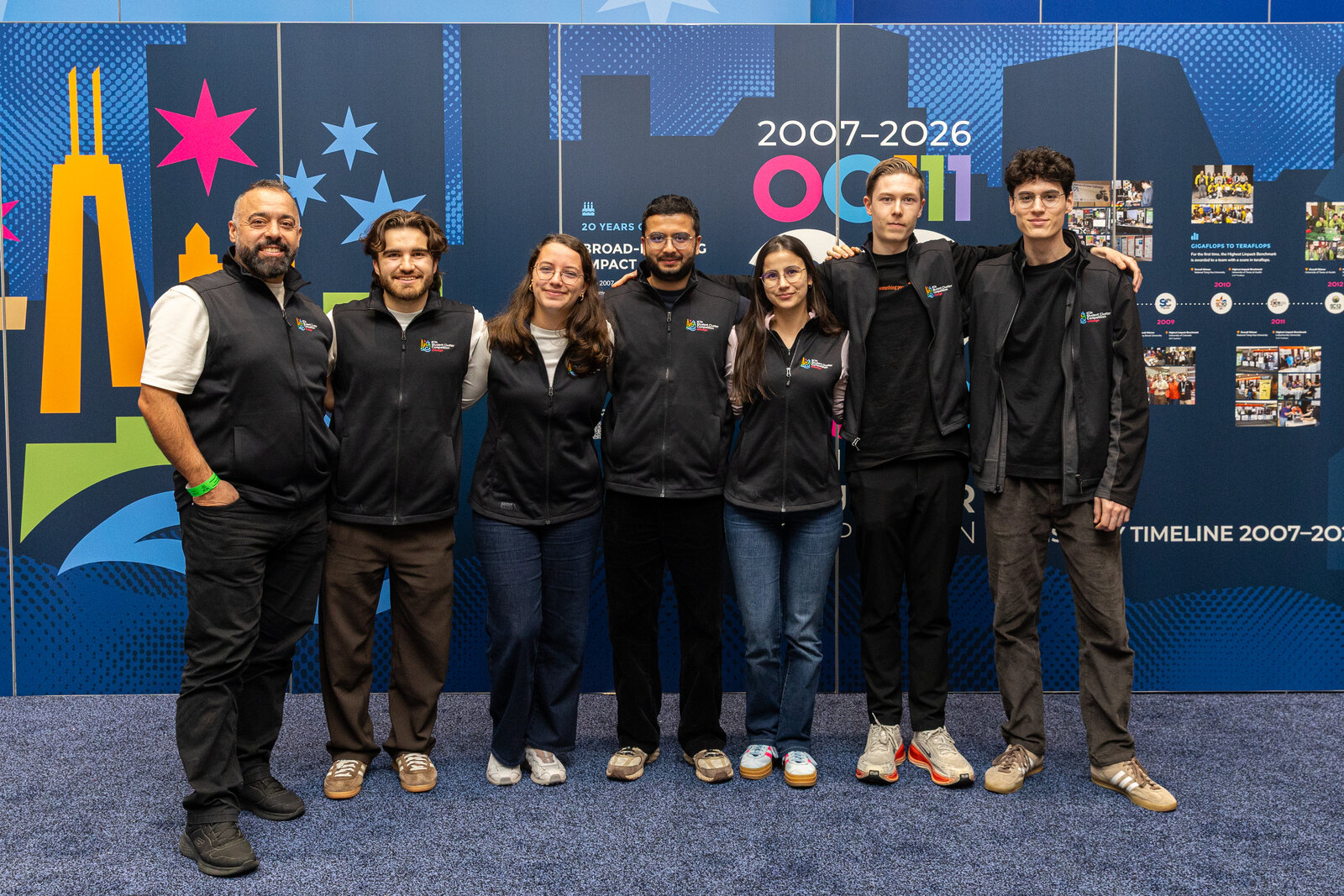
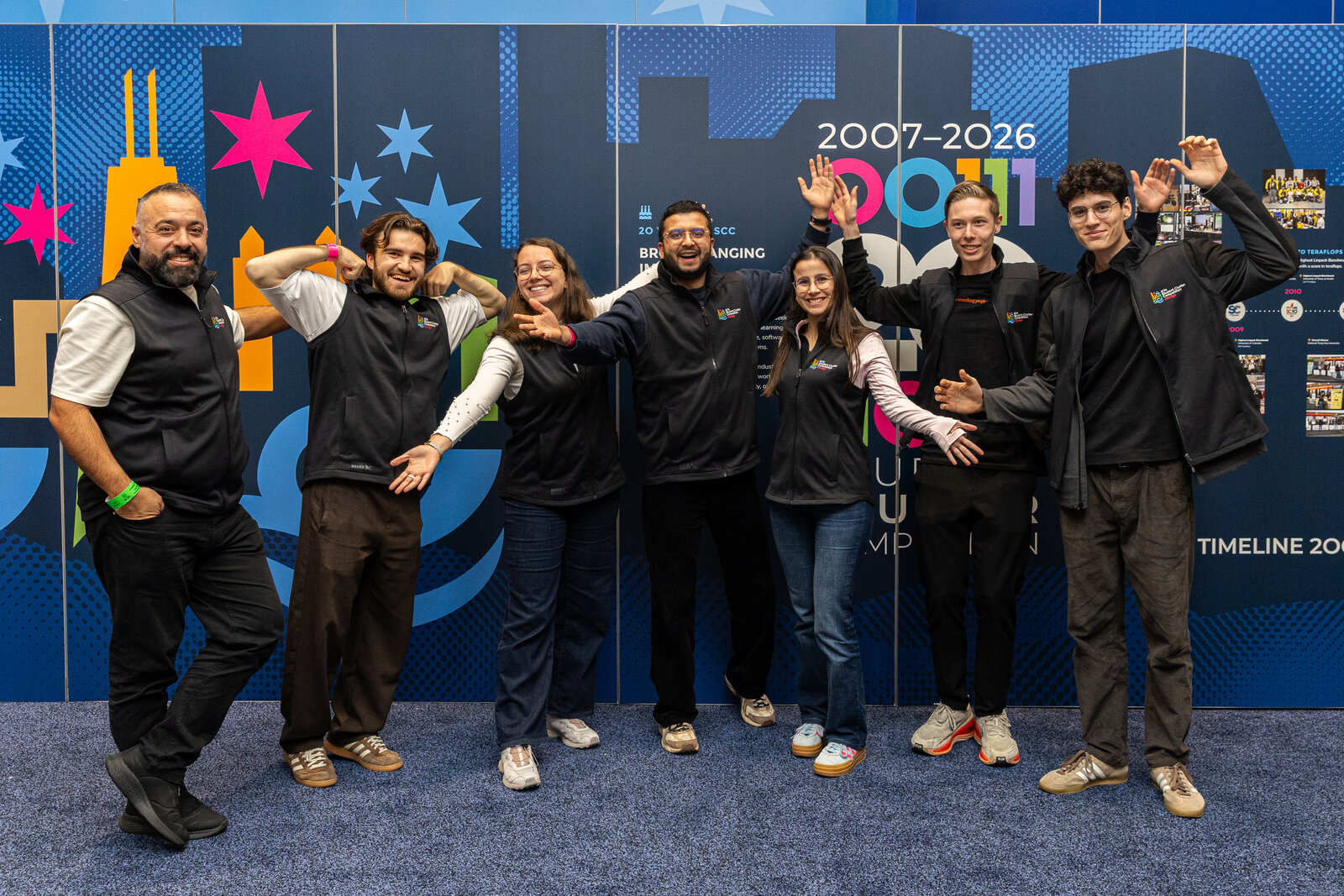

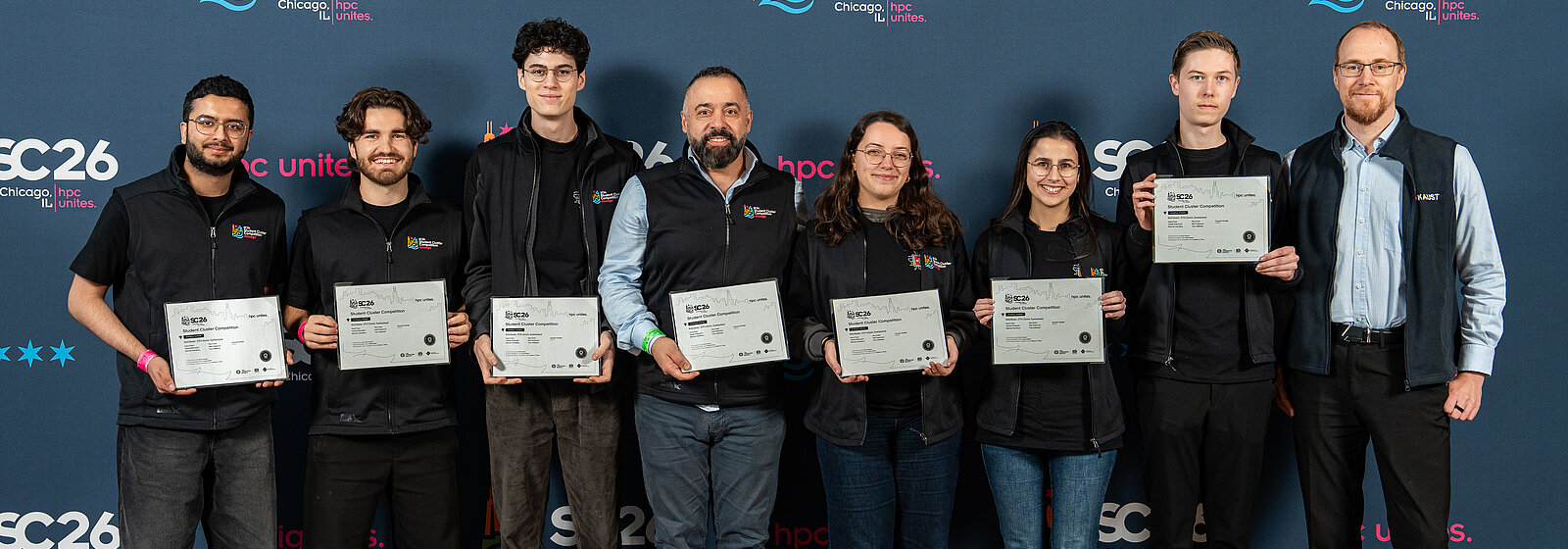
The team RACKlette was represented by Ioana Popa, Yannik Rüfenacht, Shivram Sambhus, Nico Suter, Neli Tsokanova and Yves Vollmeier. Their success reflects months of preparation and teamwork, supported by experienced mentors and former competition participants.
CSCS played an important role in supporting the team, notably through Hussein N. Harake, who served as a mentor alongside ETH Professor and Chief Architect for AI & ML at CSCS, Torsten Hoefler. The students also benefited from the expertise and contributions of team alumni, including the development of tools such as Kez, an in-house package manager developed by Yi Zhu and other team members. CSCS was also among the sponsors providing the hardware needed for the competition, alongside E4 Computer Engineering, AMD, Dell Technologies and NVIDIA.
The back-to-back victories at ISC and SC26 mark an exceptional year for the ETH Zurich team and highlight the value of collaboration between academic institutions, HPC experts and industry partners in nurturing the next generation of HPC talent.