September 9, 2026 - by CSCS
Name
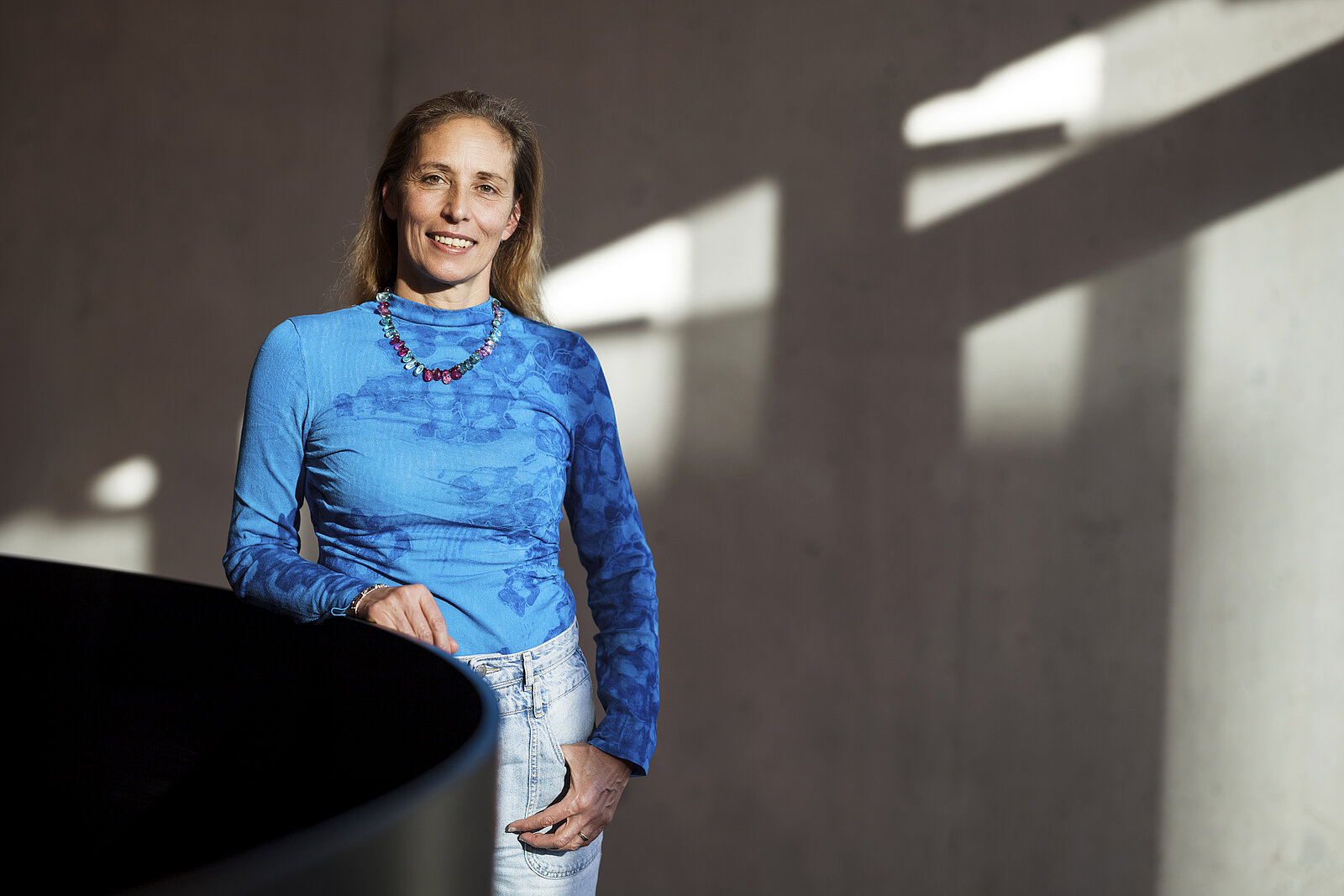
Marcella Iannuzzi
Position
Adjoint Professor at the Department of Chemistry of the University of Zurich.
Area of research
Computational Materials Science.
My focus
My research centres on ab initio simulations to unravel fundamental processes at interfaces, in condensed phases, and under excitation, with applications to sustainable energy and materials. We develop and apply advanced computational methods to address three areas where electronic structure, dynamics, and spectroscopy converge: (1) light-induced processes relevant for photovoltaics, photocatalysis, and optoelectronics, (2) X-ray spectroscopy bridging molecular solutions and quantum materials, and (3) functional interfaces spanning nanofluidics, catalysis, and energy conversion. All developments are implemented in the CP2K code, for which I am a core developer, ensuring broad community access and impact.
What supercomputing and Alps mean for me
My research depends critically on HPC resources like Alps at CSCS. They enable the system sizes, timescales, and statistical sampling needed to bridge idealized models and realistic operating conditions, which transforms ab initio simulations into quantitative predictions directly comparable to experiments. Supercomputers also provide the computational environment necessary for developing, testing, and optimizing new methods in CP2K, ensuring it remains a leading software package in materials science with broad community impact.
What challenges do I face
Understanding how electronic, optical, and vibrational excitations are triggered and coupled at ultrafast timescales is essential for advancing photovoltaics, photocatalysis, and optoelectronics. Recent developments in ultrafast laser spectroscopies and X-ray pump-probe techniques provide unprecedented experimental access to these processes, but interpreting the data requires sophisticated modelling that goes beyond ground-state electronic structure. I am developing computational strategies that offer an optimal balance between accuracy and computational feasibility, enabling direct simulation of experiments.
What I like most about my work
Making the invisible visible: processes like electronic charge redistribution, quantum delocalization, or transient intermediates that live just for picoseconds. Experimentalists see averaged signals; we see the movie playing underneath. Our research reveals how electronic effects explain everything, and that complex behavior often reduces to fundamental electronic principles.
My favourite recent project at CSCS
Recently we investigated the transport behavior of highly concentrated potassium chloride (KCl) solutions at the nanoscale using ab initio molecular dynamics simulations. This required massive use of HPC resources at CSCS. Our calculations revealed that electrical conductivity increased significantly under confinement, with an even stronger effect on positively charged graphene surfaces. The positive surface charge led to chloride ion accumulation near the graphene, and enhanced overall conductivity. Furthermore, surface charges determined the direction of electro-osmotic and diffusion-osmotic flows, highlighting their key role in nanoscale transport phenomena. These findings demonstrated the importance of accounting for electronic structure effects in accurately predicting transport properties and provided deeper insight into ion dynamics and flow behavior in nanofluidic systems, which are a promising foundation for future technologies.
Career background
- 1997 MSc in Physics, University of Milano, Milano, Italy
- 1997–2001 Ph.D. in Materials Science, University of Milano-Bicocca, Milano, Italy
- 2001 Researcher, Max-Planck Institute for Solid State Research, Stuttgart, Germany
- 2001–2004 Researcher, ETH Zurich, Switzerland
- 2004–2006 Researcher, University of Zurich, Switzerland
- 2007–2008 Researcher, Paul Scherrer Institute, Switzerland
- 2012–2016 Researcher, University of Zurich, Switzerland
- 2012–2016 Habilitation (Venia Legendi) in computational Materials Science
- 2017–2018 Privatdozentin, Research Associate University of Zurich, Switzerland
- Since 2022 Group leader in Computational Materials Science, University of Zurich, Switzerland
- Since 2023 Adjoint Professor University of Zurich, Switzerland