September 25, 2026 - by CSCS
Name
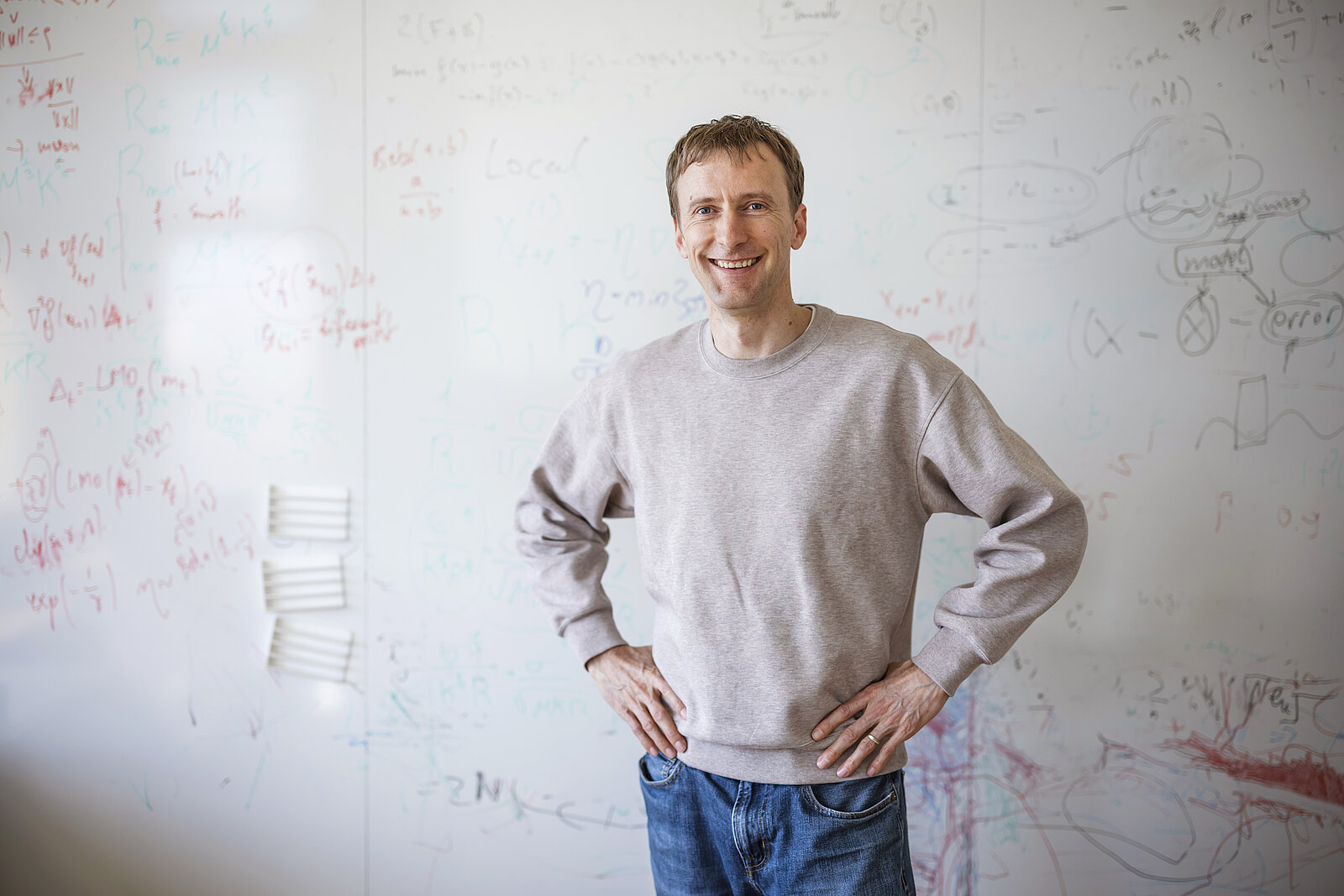
Martin Jaggi
Position
Associate Professor, EPFL.
Area of research
AI, Machine Learning.
My focus
Large language models; in particular Apertus, an open and transparent large language model built by EPFL, ETH Zurich and CSCS, launched in September 2025.
What supercomputing and Alps mean for me
Training a large language model requires enormous computing power — the kind only a handful of corporations can normally afford. Alps levels the playing field: it lets public researchers compete with billion-dollar labs. As the American cryptographer and computer security expert Bruce Schneier recently wrote, Switzerland proved that practical public AI can be built at a fraction of Big Tech's cost. Without Alps, this kind of sovereign, independent AI would remain a fantasy.
What challenges do I face
The hardest part is keeping up with a fast-moving field. On top of that, ramping up new infrastructure always comes with many technical problems. Luckily, our young team of motivated students and researchers from across Switzerland was able to overcome hurdles quickly.
My favourite recent project using Alps
Apertus is a step towards AI that belongs to everyone, and it was made possible thanks to Alps. It's the most powerful fully open language model ever released by a public institution and stands out for its multilingualism, supporting over 1,000 languages, as well as its open and responsible training recipe. All training data and algorithms are fully transparent and reproducible, enabling new research on the capabilities and risks of such models. It's free for anyone to use, inspect, and build upon, and its transparency opens up new use cases — for example in public administration or other sensitive areas where one may prefer not to depend solely on commercial US and Chinese models.
What I like most about my work
The moment Apertus went live, people from dozens of countries started building on it. It is freely available in two sizes — one with 8 billion parameters and the other with 70 billion —and the two models quickly reached over two million downloads. I love that our work sits at the crossroads of cutting-edge research and real public benefit. The response our small team received from users all over the world was very encouraging and showed that our work is meaningful.
Career background
- 2006 MSc in Mathematics, ETH Zurich
- 2011 PhD in Theoretical Computer Science, ETH Zurich
- 2012 – 2013 Postdoc, École Polytechnique, France
- 2013 Postdoc, UC Berkeley, USA
- 2014 – 2016 Senior Researcher, ETH Zurich
- 2016 – 2023 Tenure Track Assistant Professor, EPFL
- Since 2023 Associate Professor, EPFL