July 23, 2026 - by CSCS
Could you briefly introduce yourself?
I'm Ephraim Siegfried, and I hold a bachelor's degree in computer science from the University of Basel. In the coming semester, I will start my master's at the University of Copenhagen. I'm a big nerd for distributed systems and functional languages, and I write blog posts about them. I'm also fond of reusing old computers as servers and building my own private cloud infrastructure.
What fascinates you in the world of supercomputing?
Nowadays, supercomputers are not just one big mainframe. It's a set of highly performant nodes that need to collaborate. I'm impressed by how we manage to orchestrate thousands of individual computers to work as a single, cohesive mind. The architecture at CSCS is particularly fascinating because it can flexibly partition this "mind" into isolated clusters, allowing researchers to run intensive workloads in complete isolation.
How did you first hear about CSCS?
My high-performance computing professor, Florina Ciorba from the University of Basel, recommended this internship to me.
Why did you want to intern at CSCS?
Building my own cloud infrastructure in my free time has given me extensive experience with containerization, reproducible builds, and configuration as code. These were exactly the skills the internship listing was seeking. I was eager to apply this knowledge in a larger context, contribute to an organization of such international relevance, and acquire new skills along the way.
What projects have you worked on during your internships at CSCS?
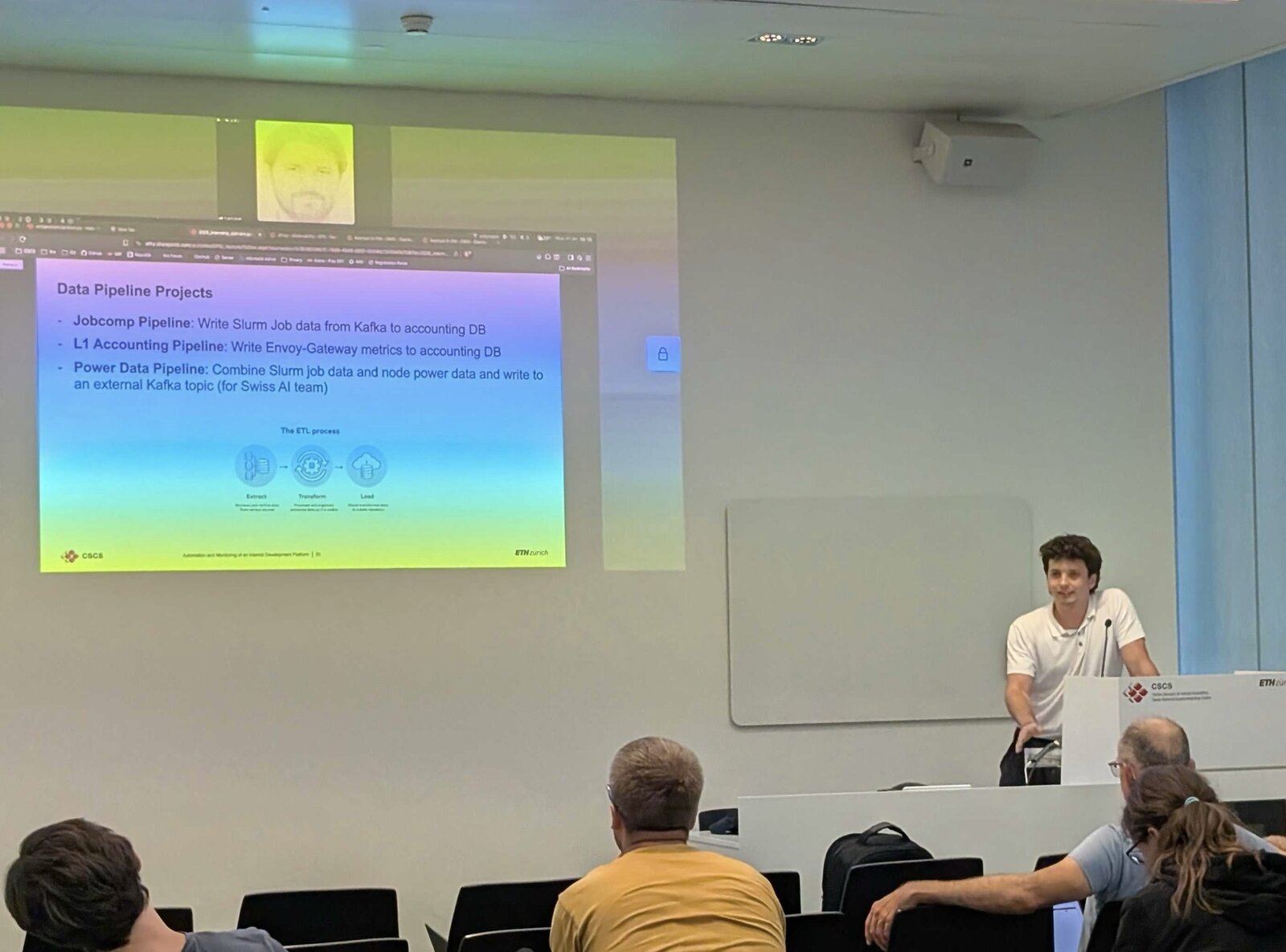
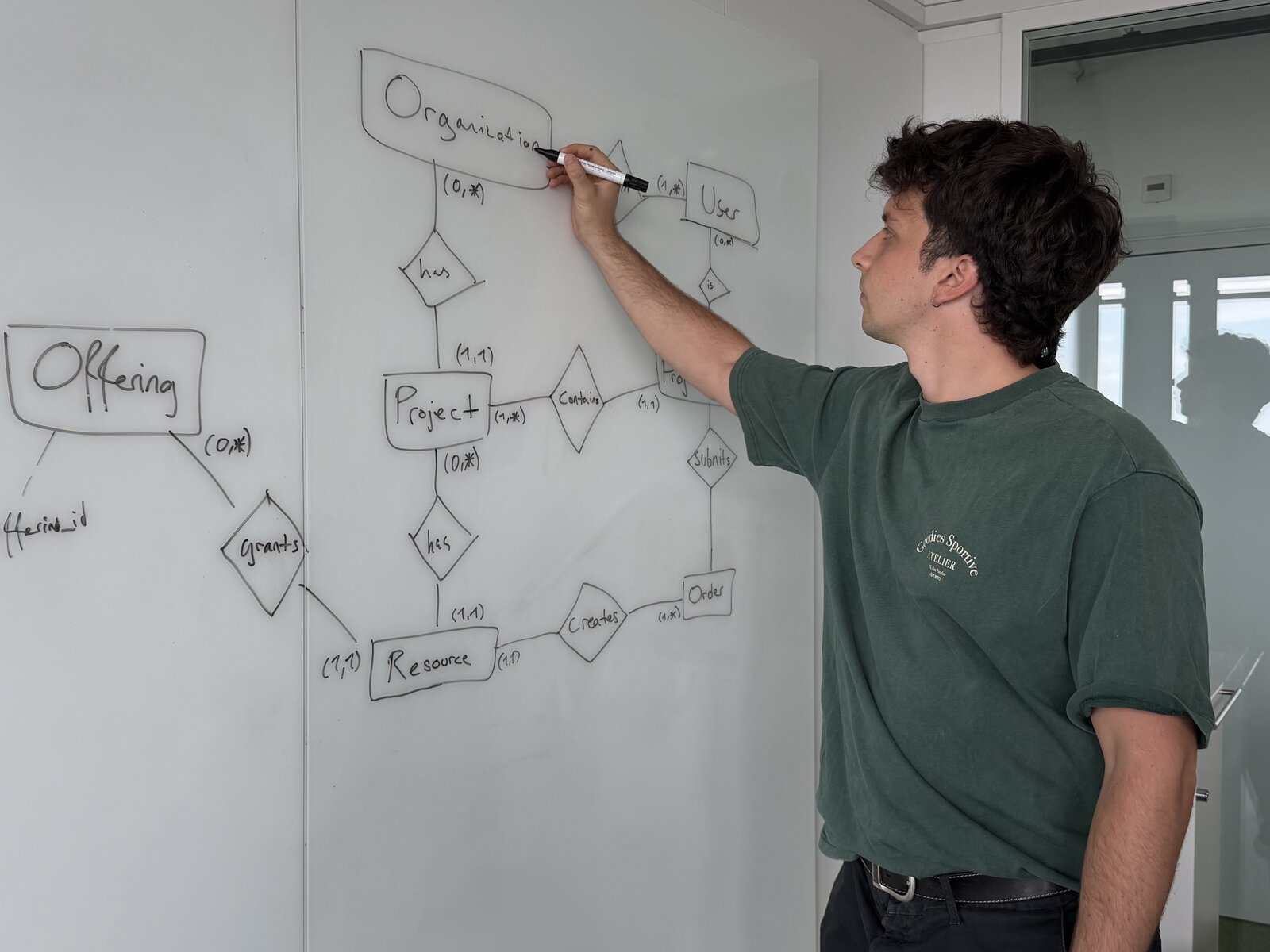
I worked on many different projects related to observability, data pipelines, and platform operations. For around eight applications at CSCS, I implemented telemetry instrumentation and created Grafana dashboards. I was also responsible for deploying a GitLab instance on Kubernetes and integrating it with many different components at CSCS. Related to that project, I developed a tool which mirrors Waldur project state into GitLab. In addition, I developed about 3 ETL pipelines using Redpanda Connect. I also started redesigning a database schema, though I unfortunately didn't have enough time to complete this project.
How would you describe a regular day as an intern at CSCS?
In the morning, I would plan my activities for the day and then work on two or three different projects. My mentors gave me the option to fully invest my time in one project at a time, but I prefer having variety throughout the day. Around 12:00, a coworker usually comes knocking at my door, and we eat lunch together. At 13:00, I resume my work and continue until 17:00.
What will you take home from this experience?
I learned a lot about how large-scale infrastructure works and how to connect the dots in that context. Being able to work on such large Kubernetes clusters backed by powerful nodes is not something I get to do every day, and it was really cool to have been part of it. Most notably, I am grateful to have had such amazing coworkers and supportive mentors. Thank you!