April 13, 2026 – by Santina Russo
It has just concluded: the SwissTwins project. Its goal was to leverage CSCS’s Alps research infrastructure to help Switzerland remain competitive at a global level, particularly in weather and climate research. Originally launched as a funding replacement after Switzerland’s lost access to the EU’s Horizon 2020 programme, the initiative ultimately turned into a success story—with lasting effects.
Notably, in one of the project’s work packages, a group of software engineers from CSCS and SCITAS, the Scientific IT and Application Support platform at EPFL, worked together to make the Alps supercomputer’s vCluster environment portable. The vClusters (versatile clusters) are the key structure of Alps—its software-defined partitions. They unlock a portion of the supercomputer for users, including everything necessary: access to its powerful processors, its data storage and management capabilities, and all the services and utilities that are part of the Alps supercomputing environment.
Moving the Alps environment into the cloud
“The goal was to enable the use of the Alps vCluster environment anywhere, regardless of the GPU/CPU architectures of different machines, and without the need to change the software stack researchers depend on,” said Gilles Fourestey, Operational Director of SCITAS. Alex Upton, Senior Research Project Manager at CSCS and project lead of SwissTwins, added: “By making the vClusters independent of hardware architectures, we made the technology more attractive to users. Now, transferring scientific workloads to and from Alps at CSCS is much easier than before.”
One consequence is that this newly platform-agnostic Alps vCluster environment can now be deployed in the cloud. This was done, for instance, on Google Cloud Platform (GCP). “Switching between the cloud platform and Alps is now effortless, even for demanding and highly specific scientific software workloads,” Upton said.
Strengthening public services and SMEs
A demonstration of this was the successful execution of the numerical weather forecasting model ICON, more specifically the ICON-CH1 model on Google’s cloud platform. This high-resolution model is part of the workflow constantly used by the Swiss Federal Office of Meteorology and Climatology MeteoSwiss for forecasting 5-day atmospheric conditions in Switzerland. Similarly, vClusters were also deployed on the EPFL HPC/AI cluster in Lausanne. This allows EPFL users, for example, to start testing their scientific software and workloads on the local system and then move to Alps at CSCS whenever it suits them.
“In addition, platform-agnostic vClusters will enable easy offboarding and thus complete the life cycle of private-sector projects,” Upton said. Small and medium-sized enterprises (SMEs) are increasingly using CSCS’s computing power to develop AI applications. However, once these applications have matured into products, SMEs must transition from the research-oriented supercomputer to their own production infrastructure. With portable vClusters, this transfer can take place quickly and smoothly.
Portable vClusters, stronger relationships
“Another very positive outcome of this work is the fruitful relationship that has developed between engineers at CSCS and SCITAS,” said Gilles Fourestey. He acknowledged the outstanding efforts of the technical teams at both institutions, whose sustained work during the project made these developments possible. Alex Upton, Senior Research Project Manager at CSCS and project lead of SwissTwins, agreed: “This successful collaboration has created a great deal of trust between us, which we can now build on.”
Indeed, the work will continue within the HEARTS project, Switzerland’s contribution to the European AI Factory network. Specifically, engineers from SCITAS and CSCS plan to develop a trusted research environment (TRE) for the Lausanne University Hospital CHUV. A TRE is a secure and controlled computing infrastructure for research using biological and medical patient data while protecting confidentiality. To achieve this, the team plans to create a separate vCluster on the Alps supercomputer for data mining and ML, with secure data transfer to CHUV.
Swiss Twins: stepping into the breach
Launched by the State Secretariat for Education, Research and Innovation (SERI), SwissTwins funded a total of ten work packages between December 2022 and February 2026. The project partners were EPFL, Paul Scherrer Institute (PSI), the Scalable Parallel Computing Lab (SPCL) of ETH Zurich, and CSCS, which served as project lead. The work packages addressed topics such as enhancing the AiiDA workflow engine in order to deploy weather and climate workflows, automating the provisioning of vClusters, enabling container-based tenant-managed software environments, and advancing the Data Centric Parallel Programming (DaCe) paradigm toward production readiness, which ultimately helped a team that included researchers from ETH Zurich and CSCS win the Gordon Bell Prize for Climate Modelling.
Moreover, this new portability of the vClusters boosted several other work packages within SwissTwins—and will likely underpin many future cases where supercomputing is combined with the mobility of cloud infrastructures.
Alps geo-distribution for fail-safe supercomputing
One example of this added flexibility is AlpsE, an extension of Alps installed next to the SCITAS servers in Lausanne as part of the geo-distributed design of the Alps infrastructure across multiple sites. This design offers a major advantage: it enables geographically independent and redundant supercomputing services, as well as access to large amounts of data stored in different locations.
Among other things, this can serve as a fail-safe for critical services such as the numerical weather forecasts by MeteoSwiss. In the event of a power outage at one of the geo-redundant sites—AlpsE in Lausanne and Alps at CSCS in Lugano—the unaffected location can quickly take over daily numerical weather forecasting, minimizing downtime. “This kind of reliability is important, as weather forecasts are needed for companies and public authorities to prepare for bad weather or even storms,” said Alex Upton.
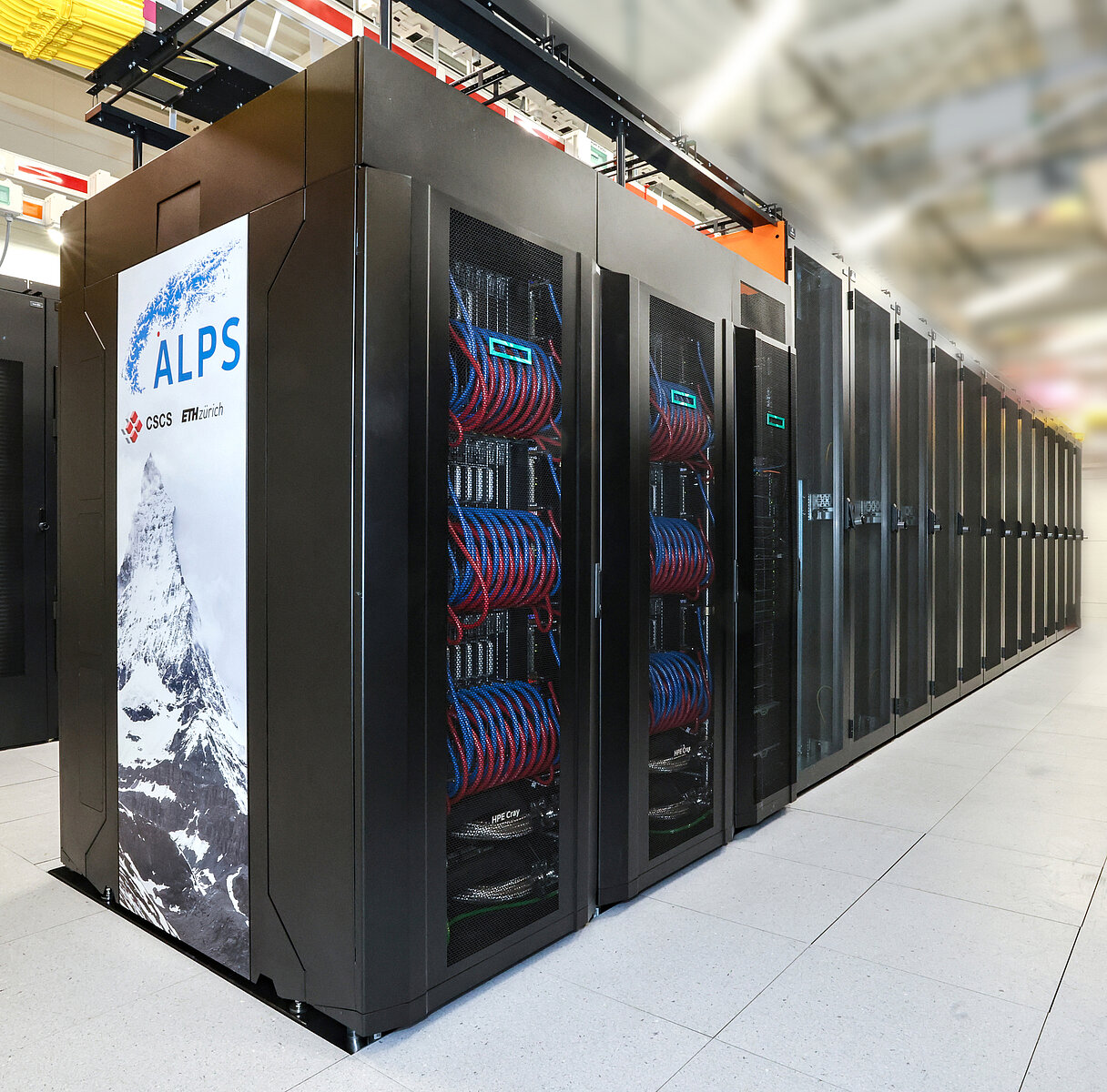
Another extension of Alps, named AlpsB, is now located in Bologna at the facilities of the European Centre for Medium-Range Weather Forecasts (ECMWF). ECMWF holds data that are central to weather and climate research and modelling. Its meteorological archives include reanalysis datasets, which blend historical observations with modern weather prediction models to create consistent records of past atmospheric conditions. ECMWF's current flagship dataset, ERA5, spans from 1940 to the present.
Providing essential data in a flash
“These data are incredibly valuable for research and can be used to train ML weather and climate models,” said Jérôme Tissières, Senior Network Engineer at CSCS and lead of the respective SwissTwins work package. However, network access to obtain these data is slow and there is often a queue of researchers and institutions waiting for data transfer, Tissières recounts. He and his colleagues therefore aimed to provide CSCS users with faster access.
Apart from the installation of the AlpsB machine, to which ECMWF regularly pushes new reanalysis data, access is newly provided by a private ultra-large-bandwidth network connection from AlpsB to Alps at CSCS in Lugano. Among the first users of this boosted access are the ETH Center for Climate Systems Modeling (C2SM) and the group of Dominik Brunner at the Swiss Federal Laboratories for Materials Science and Technology (Empa), who will use the ERA5 dataset for environmental monitoring. Moreover, the fast connection to ECMWF will likely become even more valuable in the future, as the next generation reanalysis dataset, ERA6, will have higher resolution—and will therefore take longer to transfer.
Here, too, work package lead Jérôme Tissières highlighted the close cooperation between experts from ECMWF and CSCS within SwissTwins, across areas ranging from network security to research.
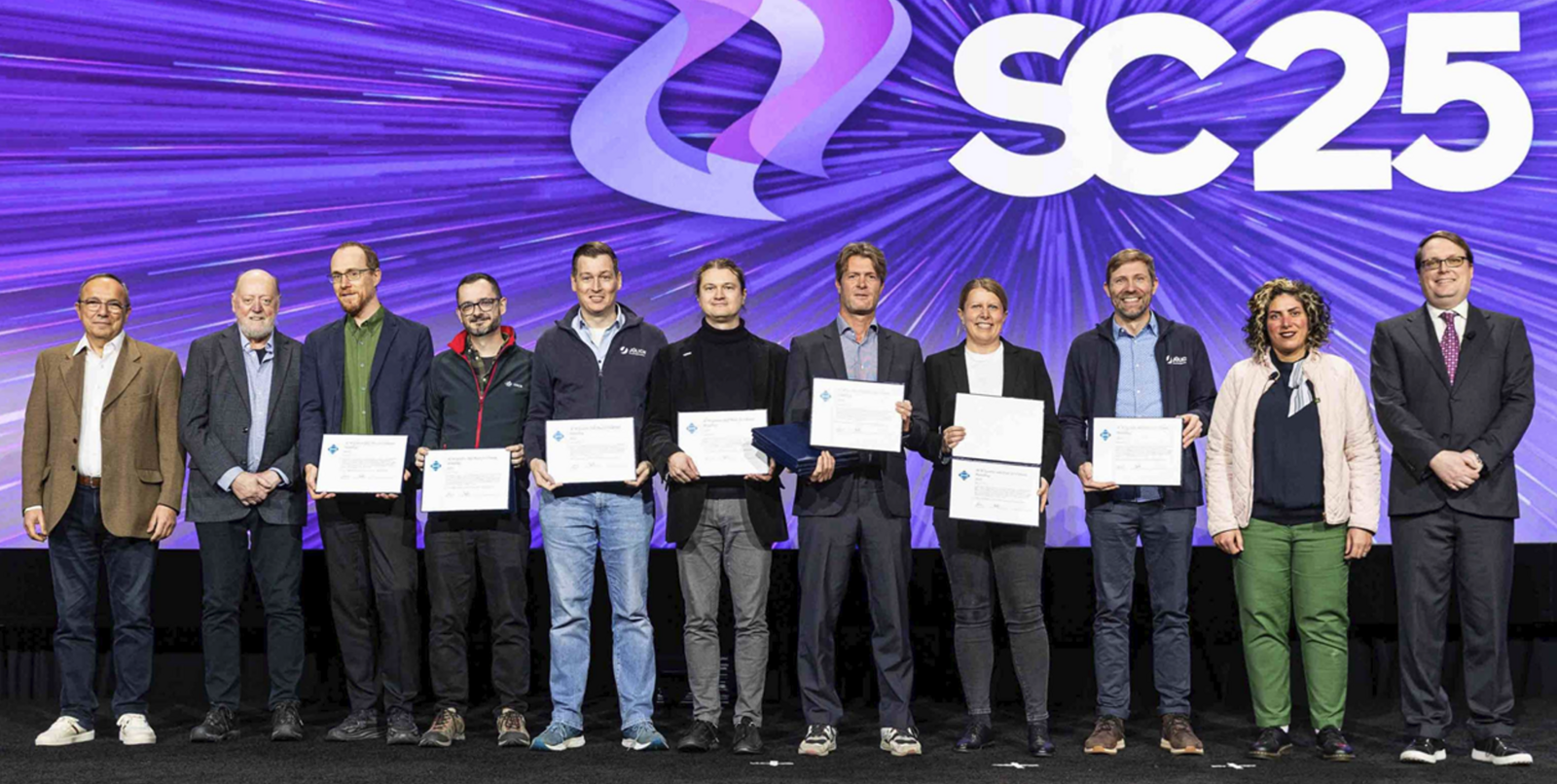
In addition to the achievements already mentioned, the scientists and engineers involved in SwissTwins developed numerous other valuable tools to support weather and climate research (see box), thereby strengthening the relationships among all project partners—EPFL, Paul Scherrer Institute (PSI), the Scalable Parallel Computing Lab (SPCL) at ETH Zurich, and CSCS. Overall, the project, which was originally launched as a stopgap measure, became a full-fledged success story. And both the technical solutions developed and the relationships forged in the process will very likely outlive the project itself.
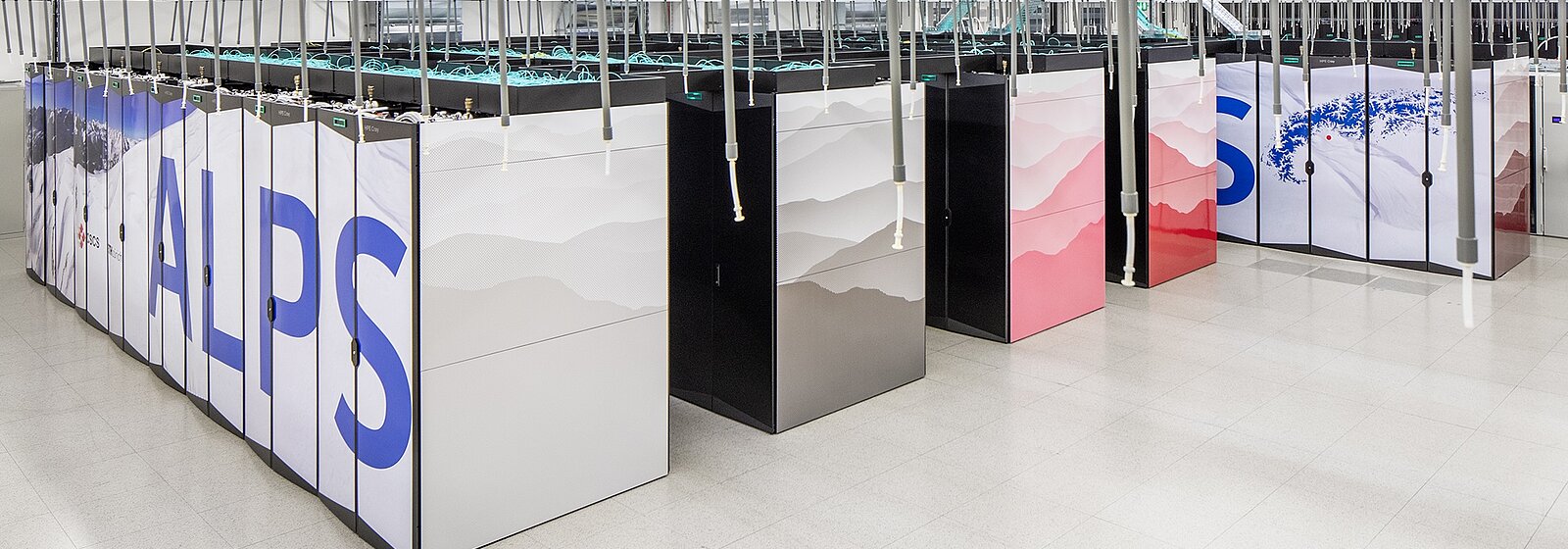
Cover Image: The Alps supercomputer at CSCS in Lugano.