
February 26, 2026 – by Santina Russo
Will you bring an umbrella, or not? Bike or bus to go to work? And which jacket should you wear, the nice one or the really warm one? The answers to these simple but intimate daily questions usually become obvious after opening a weather app. But weather forecasts don’t just influence daily decisions, they also play a crucial role in disaster management, business operations, and agriculture.
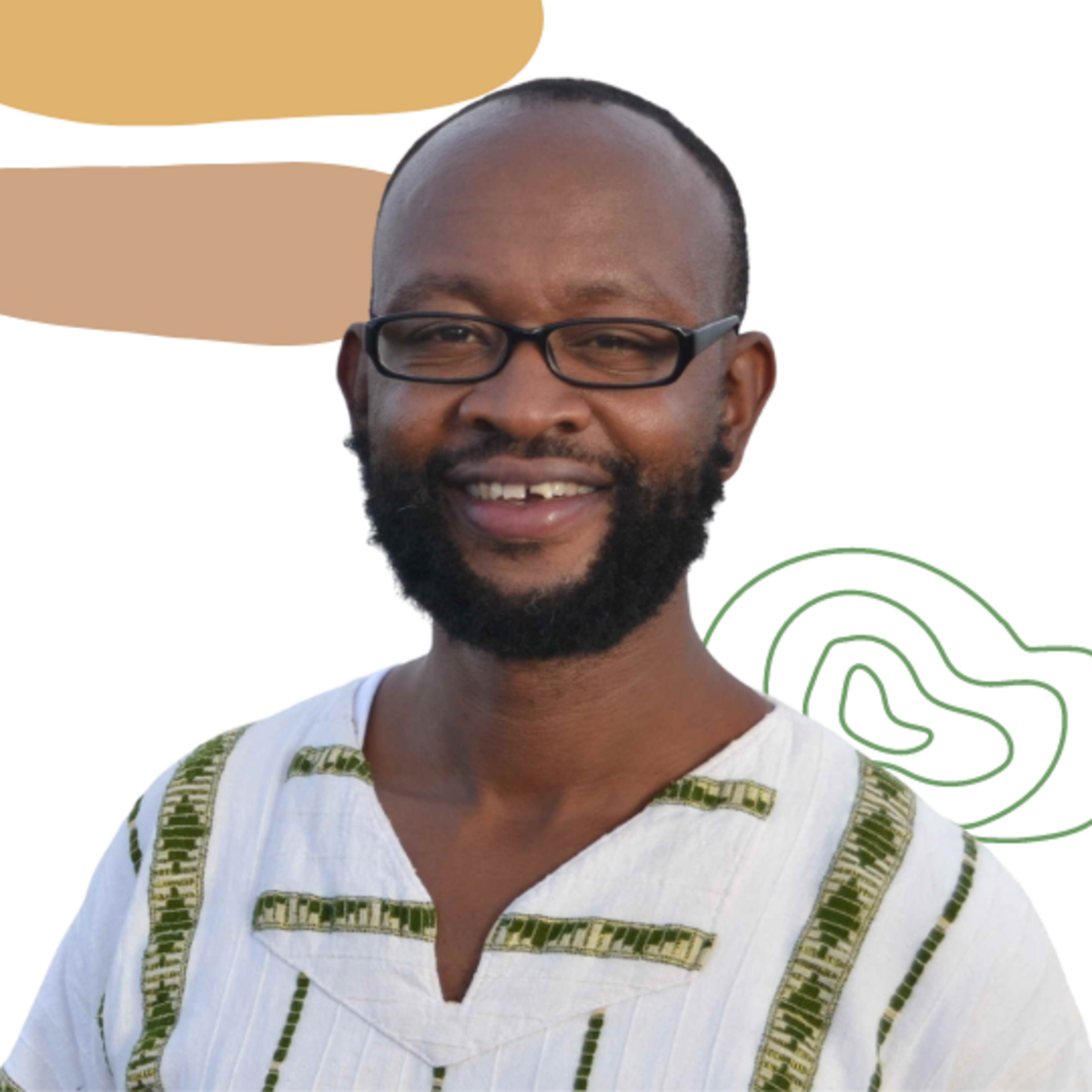
In agriculture, reliable forecasts of rainfall and temperature help farmers decide when to plant, irrigate, and harvest. “This is particularly important for African regions, as 95 percent of agriculture in sub-Saharan Africa depends on sufficient rainfall,” says Ciira wa Maina, an Associate Professor and Director of the Centre for Data Science and Artificial Intelligence at the Dedan Kimathi University of Technology in Nyeri, Kenya. So far, however, weather forecasting models don’t work well for Africa. That’s the result of recent computer model analyses by Maina and his team, carried out on CSCS’s Alps supercomputer.
An equity network enables new science
For Maina and his team, however, access to the supercomputer—and to the expertise required to develop scientific and AI applications that run efficiently on such a powerful machine—was not a given. As a researcher in Africa, he faces difficulties that scientists in wealthier countries are much less likely to encounter. “We have a very vibrant lab, and we do a lot of research in AI and in interesting application areas. But while we have talented young scientists and software engineers, and access to high-quality local data, access to computational resources has been a constant issue”, stresses Maina, who is also board chair of Data Science Africa, a non-profit organization that trains young scientists in data science and AI to tackle African-specific challenges.
This inequality in access to supercomputing and AI is what the International Computation and AI Network (ICAIN) aims to address. ICAIN is Switzerland’s strategic initiative to develop trusted, sovereign, and mission-aligned AI, with the goal of reducing global inequality. “ICAIN connects researchers—especially from the underprivileged Global South—to world-class computing and supercomputing resources, such as Alps at CSCS, and to leading research institutions like ETH Zürich and EPFL,” explains Katharina Frey, ICAIN’s executive director.
Towards democratizing access to supercomputing
As one of ICAIN’s founding partners, CSCS contributes by providing access to its supercomputers—first Piz Daint and now the Alps infrastructure—together with engineering support to help researchers get started with large-scale computing. “We opened our infrastructure to this initiative because improving weather data and modelling worldwide is in everyone's interest,” says Thomas Schulthess, Director of CSCS. “What I find particularly compelling is working with highly capable partners who can drive the science independently once they have access to the right infrastructure,” he adds. “This creates a genuine win-win: we help enable impactful research globally, while benefiting from strong collaborators who extend the reach and value of our infrastructure.”
ICAIN also addresses inequalities directly through the projects it funds. Launched in January 2024, the initiative has already started five pilot projects—one of them is Ciira wa Maina’s work on AI for better weather forecasts in Africa.
-
The team compared the results with measured weather data from more than 100 meteorological observatories across the continent—with a sobering outcome.
-
African data under the weather
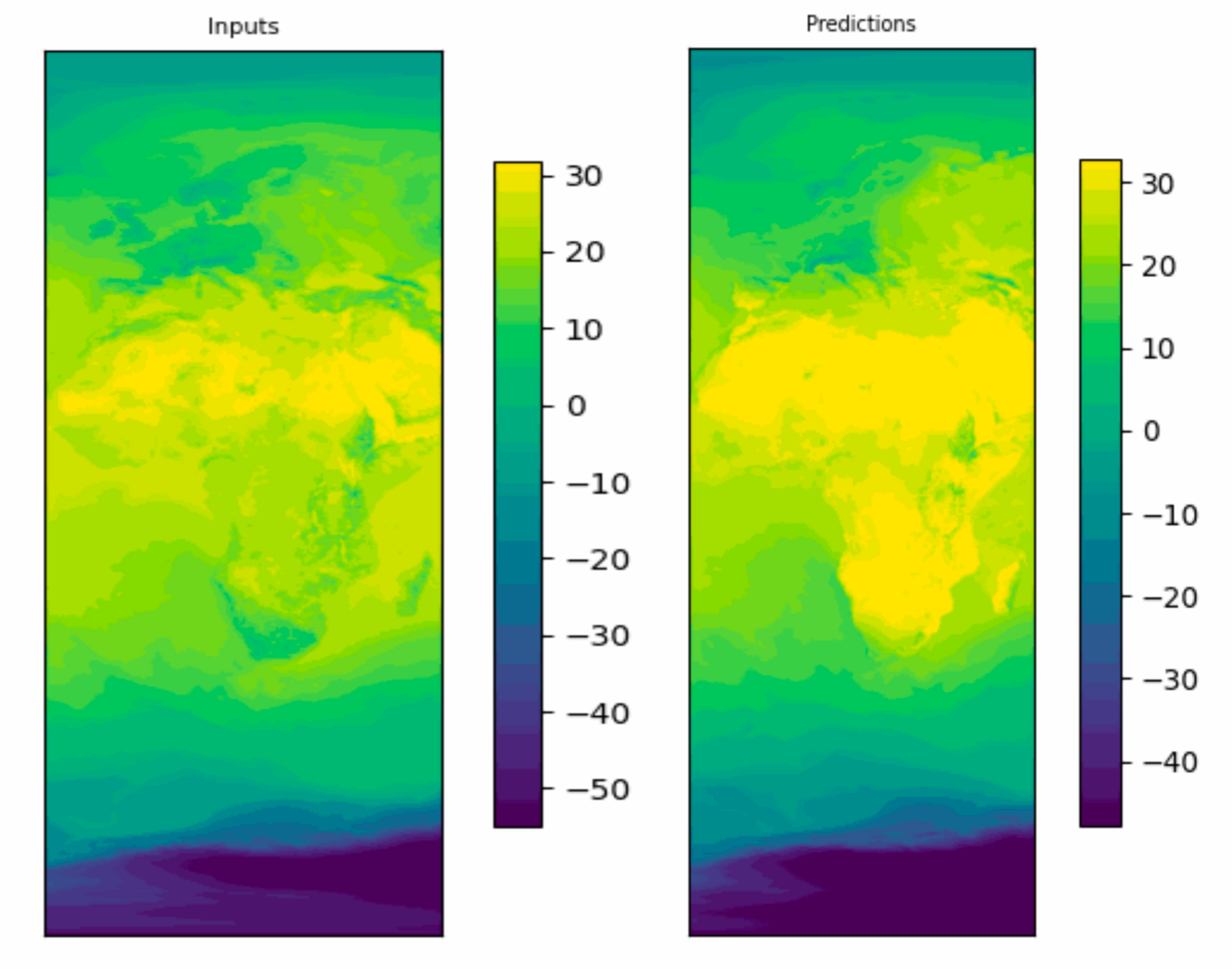
Maina’s overarching goal is to improve the accuracy of weather forecasts to support agricultural production in Africa. “Accurate forecasts boost productivity and decision-making in agriculture, which is particularly important in Africa, where the livelihoods of millions depend on rain-fed farming,” says the project leader. As a first step, he and his team built an AI-driven pipeline for weather forecasting in Africa using GraphCast, a state-of-the-art deep learning model developed by Google DeepMind, and ran it on CSCS’s Alps. They then compared the results with measured weather data from more than 100 meteorological observatories across the continent—with a sobering outcome.
The errors in predicted rainfall and temperature, meaning the difference between forecast and actual weather, were about twice as high as they typically are for European regions, for example. “While in recent years ML-based models have generally improved weather forecasting, both in accuracy and computational efficiency, the forecasts are measurably worse for Africa than for first world regions,” says Maina.
The goal: AI for all
“The accuracy of ML-based models is highly dependent on the training data used,” he explains. The model they used, GraphCast, is primarily trained on global ERA5 reanalysis data, a large archive of weather data spanning several decades. As Maina’s team’s results indicate, this dataset does not always capture localized weather patterns unique to Africa. “This means that, to become more accurate for regions in Africa, such models need to be fine-tuned using regional data,” explains Maina. That’s a task that, once again, requires supercomputing resources—and one that Maina hopes to tackle next.
“If we want to move towards more inclusive and globally equal access to AI, we need to keep lowering the barriers to AI-critical resources,” emphasises Katharina Frey from ICAIN. “Even today, the importance of AI for society, the economy, politics and for tackling global challenges is often underestimated, along with the transformative power it can have for countries.”

Crucial: which problems receive attention
There is another aspect to moving towards more equity, though. “It’s also about which problems and topics are investigated in the first place,” says Maina. Many of the research questions addressed by scientists in wealthier countries are tailored to their own societies. Think about autonomous cars, speed recognition, or sensors for ski jumpers. “In Africa, we have very different problems.”
“
All the more valuable was the support we got from CSCS engineers.
”
With new access to cutting-edge computing resources such as Alps, he explains, his students now have broader opportunities. It was the first time Maina’s team had access to such a large-scale machine, and the learning curve was steep, the group leader recalls. “All the more valuable was the support we got from CSCS engineers.” Through the partnership, the young scientists in Maina’s team can now learn new supercomputing-related skills and tackle many more problems and research questions than before.
Still, the partnership doesn’t only benefit researchers in the Global South. On the contrary: “As we explore applications for the African continent, we are posing novel questions,” says Maina. “What we learn from this is part of open science. It can be transferred and benefit the Global North as well—for the public good worldwide.”
A network for global equality in AI and supercomputing
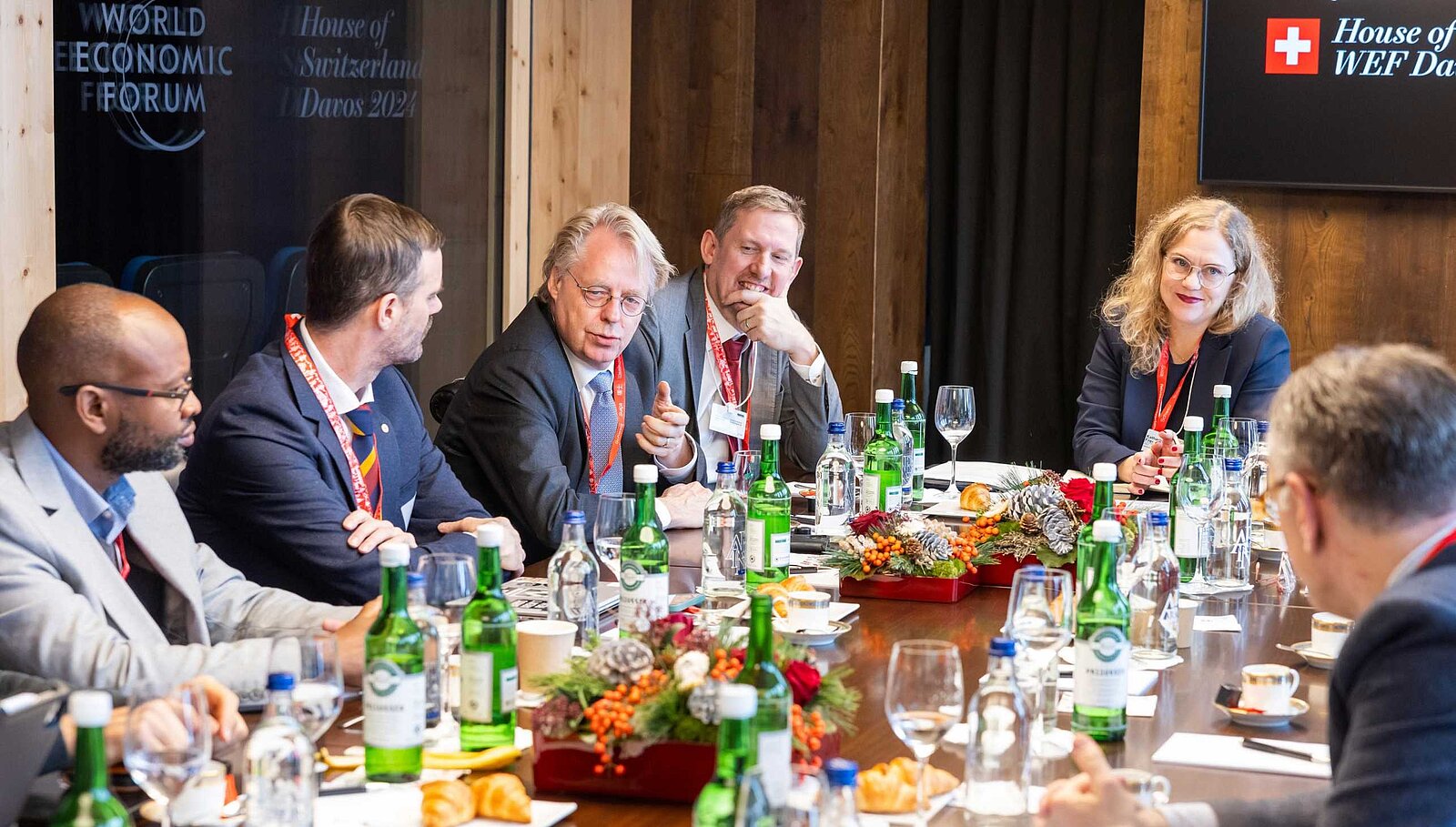
The International Computation and AI Network (ICAIN) was launched in January 2024 at the World Economic Forum (WEF) in Davos by the Swiss Federal Department of Foreign Affairs, the Swiss Institutes of Technology in Zürich and Lausanne (ETH Zürich and EPFL), CSCS, the European Laboratory for Learning and Intelligent Systems (ELLIS), the Finnish IT Center for Science (CSC) and Data Science Africa. Its goal is to help reduce inequality in supercomputing and AI. With ICAIN, the initiators aim to open up access to supercomputing, data and software infrastructures, as well as AI expertise, to a broad community—especially researchers in the Global South. The aim is to enable impact-driven international research projects that benefit society as a whole and are aligned with the United Nations’ sustainability goals. The overarching objective is to enable researchers, international organizations, and governments to build and operate AI systems on their own terms, with transparency and interoperability at the core.
ICAIN’s pilot projects
Since 2024, ICAIN has launched five pilot projects to generate early impact, test new approaches, and capture lessons learned. The first, on Africa-specific weather forecasts for agriculture, is led by Ciira wa Maina, initiator and board chair of Data Science Africa, and is described in the main text. A second project is led by ETH Zürich, EPFL and the International Committee of the Red Cross (ICRC) and aims to develop large language models suitable for humanitarian work. The main challenges here are the sensitivity of conflict-related data and the underrepresentation of the Global South in training datasets. The third ICAIN pilot project seeks to improve the early diagnosis of plant diseases with the help of spectroscopic methods and AI, since sub-Saharan Africa is particularly vulnerable to the risk of pests in agriculture. Two additional projects focus on education: one tackles AI skills training in farming communities in Eastern Africa, the other is a gamified, open-source education project called “The AI Driving License”.
Reference:
T. Ligawa, A. Kaburia and C. wa Maina. Leveraging AI Models for Regional Weather Prediction: A Data Pipeline for Africa. 2025 IST-Africa Conference (IST-Africa), Nairobi, Kenya, 2025, pp. 1-10, DOI: doi.org/10.23919/IST-Africa67297.2025.11060571.
Cover Image: Illustration produced with the help of AI. Image credit: ETH Zürich