July 14, 2026 – by Santina Russo
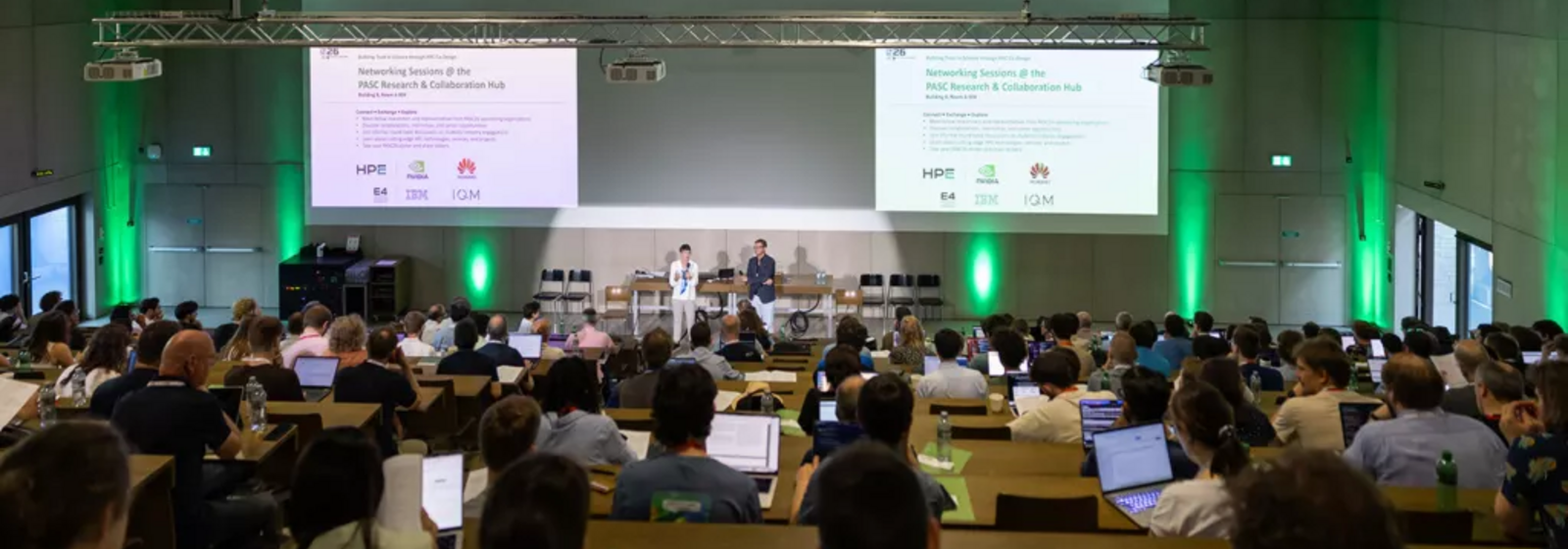
This year’s PASC Conference was all about building trust. The conference co-chairs, Dominik Obrist and Elaine M. Raybourn, welcomed 403 participants from 28 countries to PASC26, held from 29 June to 1 July on the shared campus of the University of Bern and PH Bern, the University of Teacher Education. Together, they explored the conference theme: “Building Trust in Science through HPC Co-design.”
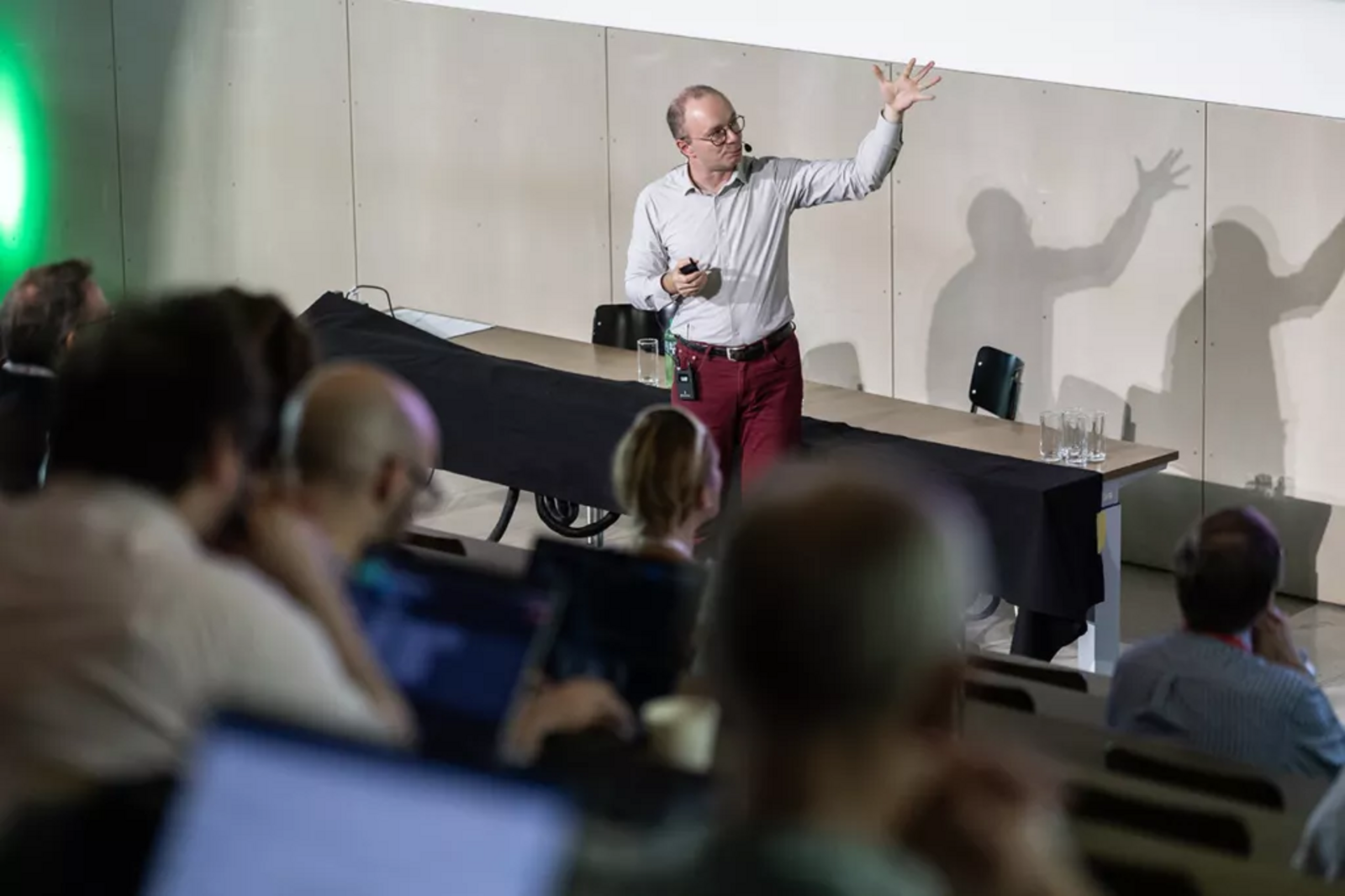
Co-design across disciplines, and between academia and industry, was already a central focus of the opening keynote. Estela Suarez from the Jülich Supercomputing Centre (JSC) in Germany described co-design as a process of cultural translation. Suarez, who leads JSC’s Novel System Architecture Design Division, discussed how shared development of workflows and models can establish a common language between different groups—from hardware specialists to domain scientists—bringing these communities together.
The relationship between science and society
For co-chair Dominik Obrist, professor of cardiovascular engineering at the University of Bern, one of the conference highlights was the public lecture held at the end of day one by distinguished ETH Zurich climate scientist Reto Knutti.
Knutti spoke about the relationship between climate science, AI, scientific results and society. Among other things, he showed a graph illustrating the steep rise in CO2 emissions since industrialization. “Imagine if this graph showed the stock market or the amount of data that needed to be stored in your data centres,” Knutti said, comparing the urgency of the facts with the response to them.
For Obrist, Knutti’s lecture offered a powerful reminder of how public perceptions of science and scientific findings matter. Elaine Raybourn agreed, adding: “He left us thinking about the urgency of the consequences of our actions, as well as on our roles as scientists and members of society in helping to address global challenges.”
The importance of dialogue
A similar sense of urgency was palpable in Alexei Grinbaum’s presentation, which approached the conference theme from another angle. A specialist in quantum information theory and the ethical challenges posed by new technologies at the Institute of research into the fundamental laws of the Universe (IRFU) in France, Grinbaum coordinates project AIOLA, which examines AI from an ethical perspective.
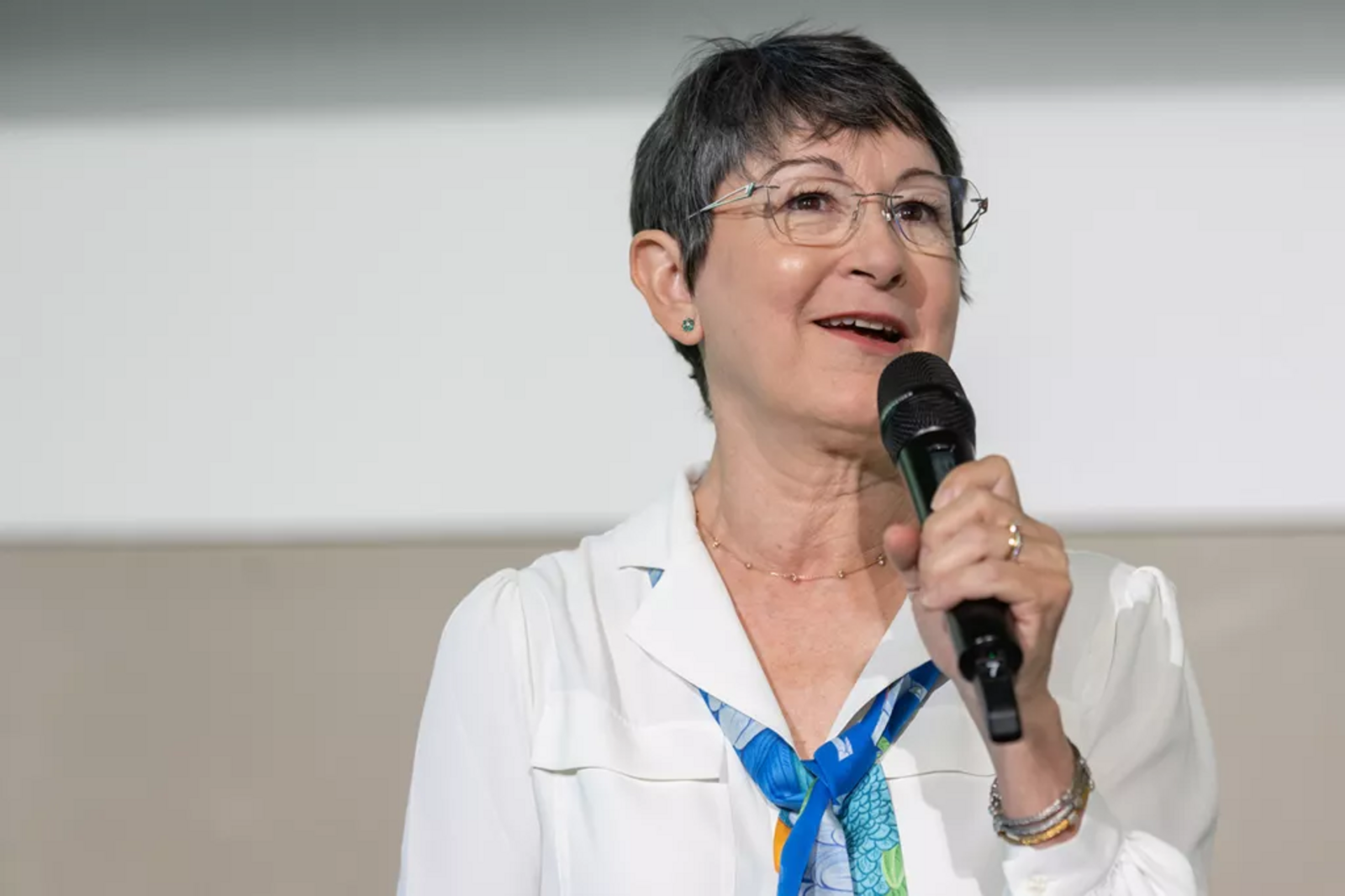
Moving beyond abstract principles, he explored how ethical considerations can be translated into scientific practice through ten different use cases, ranging from AI in healthcare and therapy to personal AI companions. Grinbaum took the audience on a journey applying high-level frameworks of AI ethics to each of these use cases.
Depending on the domain and the specific application, he explained, principles such as transparency and non-discrimination can mean very different things and translate into different requirements. He particularly highlighted the importance of dialogue in this process—for instance, between technical and ethics specialists. This again pointed to the conference’s central theme, as dialogue is also a crucial requirement in co-design.
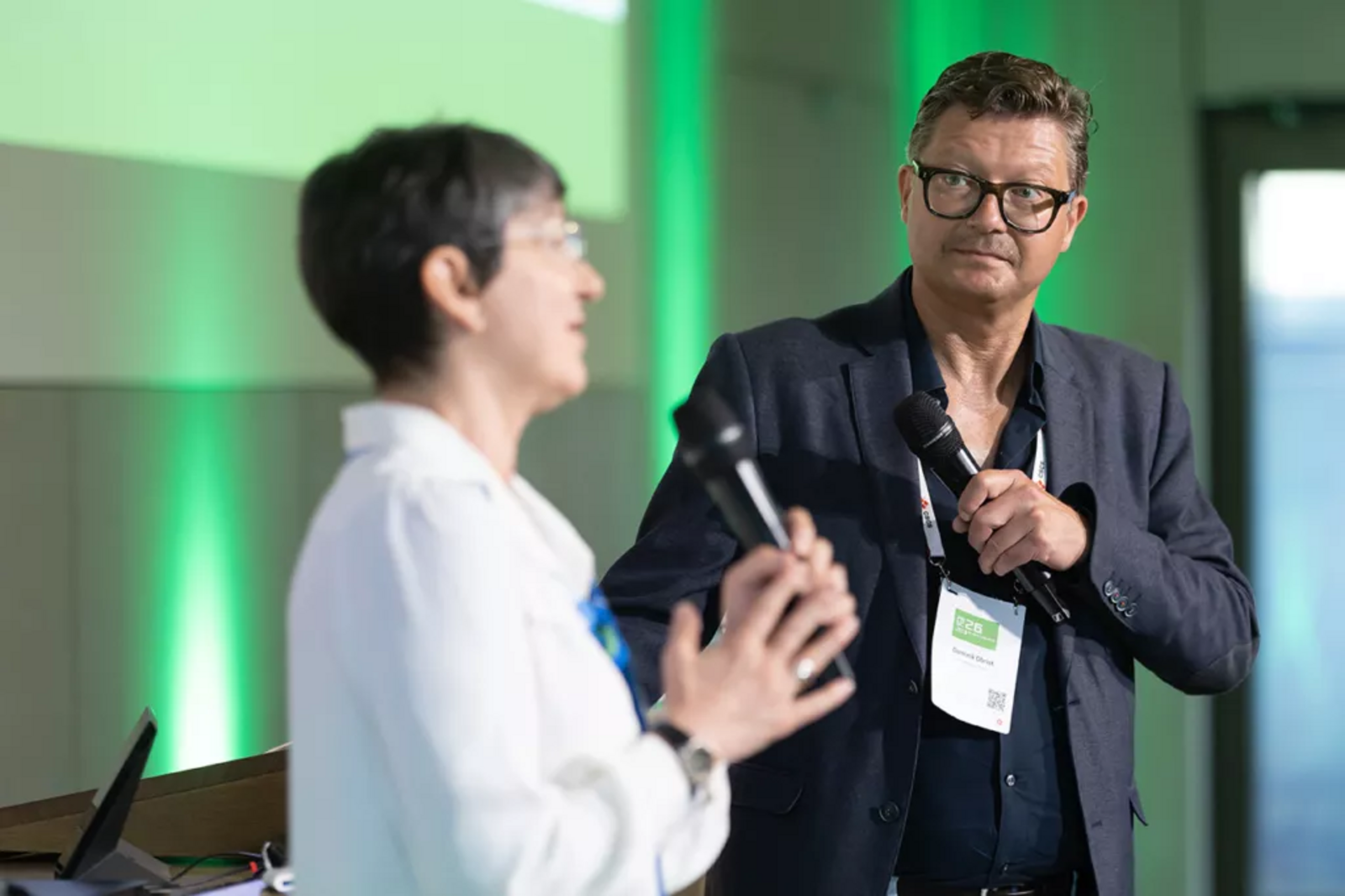
Fittingly, the programme continued with an interdisciplinary dialogue between Grinbaum and conference co-chair Elaine Raybourn. Among other things, Grinbaum spoke about the importance of continuously asking the right questions about new technologies. Sometimes, he noted, the right question does not emerge in advance, but only once a particular innovation has been developed.
Trust through public transparency
Overall, more than 150 talks, 55 posters, and 30 published papers explored co-design from a range of perspectives. In addition, 40 minisymposia addressed the conference theme from more domain-specific, and technical angles. Their topics, for instance, included co-design for HPC and the cloud, bias in algorithms and data, and the challenges using AI-driven applications in medicine.
Another highlight was the panel discussion “Resilient Science: Sustaining Computation in a Market Optimized for AI,” which opened the second day of the conference. Moderated by Marie-Christine Sawley from the International Centre for Earth Simulation (ICES) Foundation, the panel featured industry experts Utz-Uwe Haus from HPE, Yu Huang from Huawei, and Peter Messmer from Nvidia, as well as Matthias Stürmer, professor and head of the Institute for Public Sector Transformation at Bern University of Applied Sciences. The panellists discussed the challenges of co-designing hardware and software, while also emphasizing the importance of exchange and collaboration between specialists from industry and academic research.
Nvidia’s Peter Messmer particularly highlighted the role of high-performance computing (HPC) in this process. “HPC is like Formula 1,” he said. “It goes where no one has gone before, and its innovations greatly contribute to the value chain in scientific computing. Feedback from HPC centres help us improve technologies and designs.”
Matthias Stürmer, meanwhile, stressed the need to strengthen science and academia in relation to big tech companies, which currently make most of the key technological decisions. “Processes and components such as chip design, cloud infrastructure, and AI models are mostly closed and non-transparent,” he pointed out. Stürmer argued that the public sector should place greater demands on openness and open-source solutions—for instance, by purchasing only resources that meet such requirements. “Computing is becoming more political, and we have to set limits as a society.”
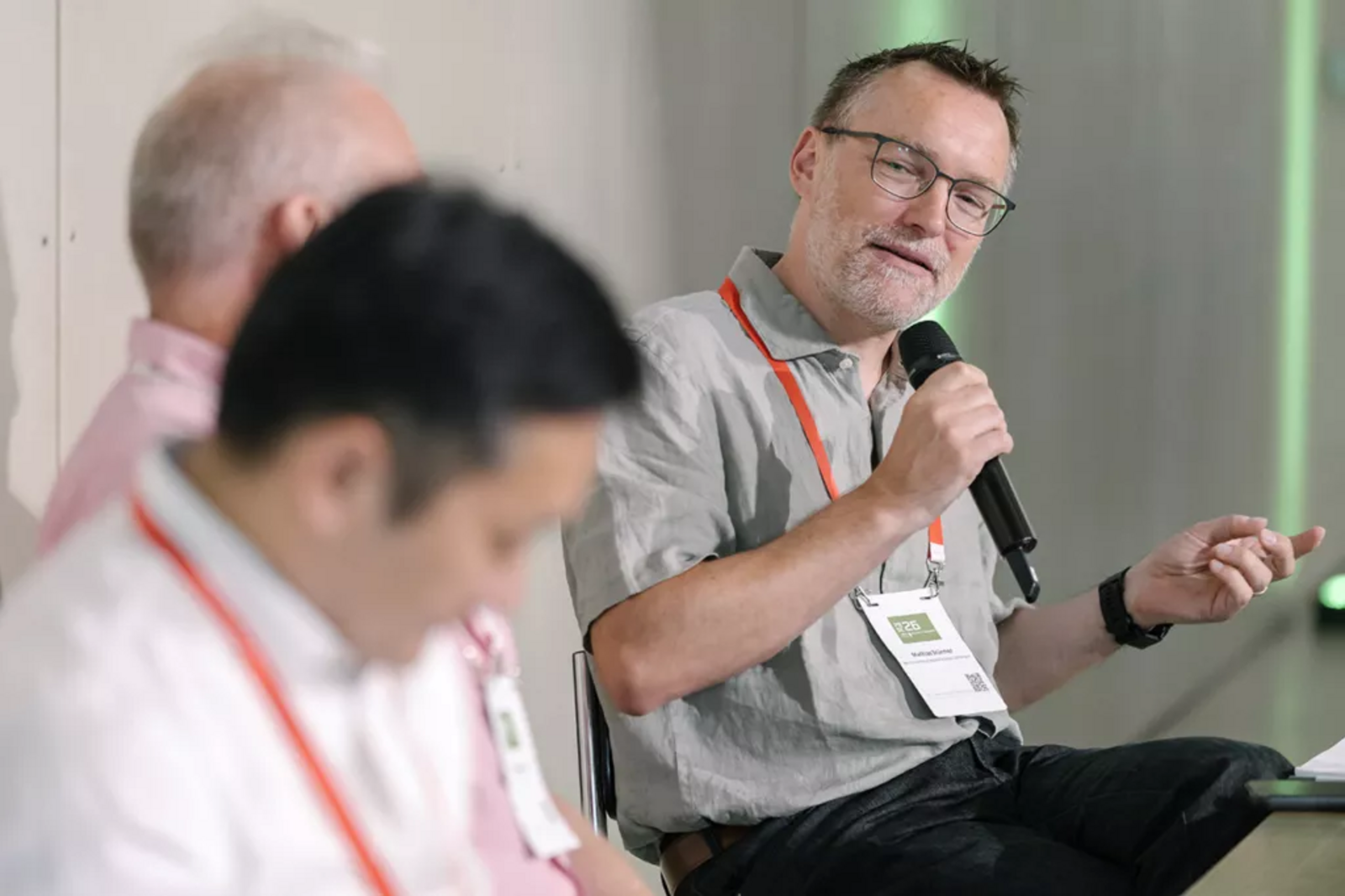
Conference co-chair Dominik Obrist agreed: “Big tech companies have a lot of expertise and are driving innovations that we need. But we must ensure an open discussion about the interest of companies, scientists, and the public.” Ultimately, he said, we need to shape these developments for the common good. Co-chair Elaine Raybourn added: “It was good for the audience, especially early-career researchers, to observe an academic debate modelling the very behaviours we hope to engender within our community: transparency and accountability. Having these discussions openly helps foster trust.”
Connecting students with experts
This discussion continued in the conference’s final event, the panel “Co-Designing Trust: Interdisciplinary HPC, AI and the Future of Science” moderated by the PASC26 co-chairs. The panellists were Emma Tolley, assistant professor at EPFL; Danny Perez from Los Alamos National Laboratory; Jay Lofstead from Sandia National Laboratories; and Katharina “Nina” Frey, director of the International Computation and AI Network (ICAIN).
Frey recounted how, in ICAIN’s latest call for proposals, UN agencies and academic researchers had been required to apply together. “By ‘forcing’ experts from different fields and scientific cultures to work together, we help build trust for later,” she said. Emma Tolley spoke about the importance of making scientific results openly available to foster public trust in science. In the context of AI in science, Danny Perez emphasized the need to continue focusing on how an answer was obtained, rather than only on the result itself. Jay Lofstead, meanwhile, stressed the importance of strengthening critical thinking among students.
Fittingly, one of the new features of this year’s PASC Conference was a series of dedicated networking events that brought students and early-career scientists together with more experienced experts from industry and academia. The events gave students a glimpse of careers they might pursue in industry, at a national lab, or in academic research, conference co-chair Elaine Raybourn said. “For some students, this was their very first conference, so these networking events were a fruitful addition.”

And, as always, after PASC is before PASC. Next year’s PASC Conference will take place in Lugano and will again address the importance of cross-sector collaboration. Its theme will be “Accelerating Scientific Computing through AI-HPC Convergence: Open Challenges.
Awards at PASC26
Once again, the PASC Conference highlighted excellence in supercomputing and the diversity of talent within the community contributing to the advancement of HPC.This year’s Best Paper Award at the PASC conference was presented to Deifilia Kieckhefen from Karlsruhe Institute of Technology for her work combining domain and tensor parallelism to train multi-billion-parameter AI weather models.
In the ACM Student Research Competition, Srinithi Krishnamoorthy from Cornell University in Ithaca, New York, received the award for the best undergraduate poster.
Among the graduate-level entries, first place went to Taufeq Mohammed Razakh from the University of Southern California, followed by Théo Jolivel from INRIA Centre at Rennes University in second place, and Adonis Haxhijaj from EPFL in third.
The PASC 26 Best Poster Award went to Nils-Arne Dreier from DKRZ (Deutsches Klimarechenzentrum).
Image credit: all photos by Marco Abram
About PASC Conference
The Platform for Advanced Scientific Computing (PASC) Conference is an interdisciplinary conference in HPC that brings together domain science, applied mathematics, and computer science – where computer science is focused on enabling the realization of scientific computation. The PASC Conference provides three days of stimulating and thought-provoking sessions, including keynote presentations, minisymposia, peer-reviewed papers, panels, and poster sessions. The conference is co-sponsored by ACM SIGHPC, and full papers are published in the ACM Digital Library.