July 17, 2026 – by ETH Zurich Redaktion
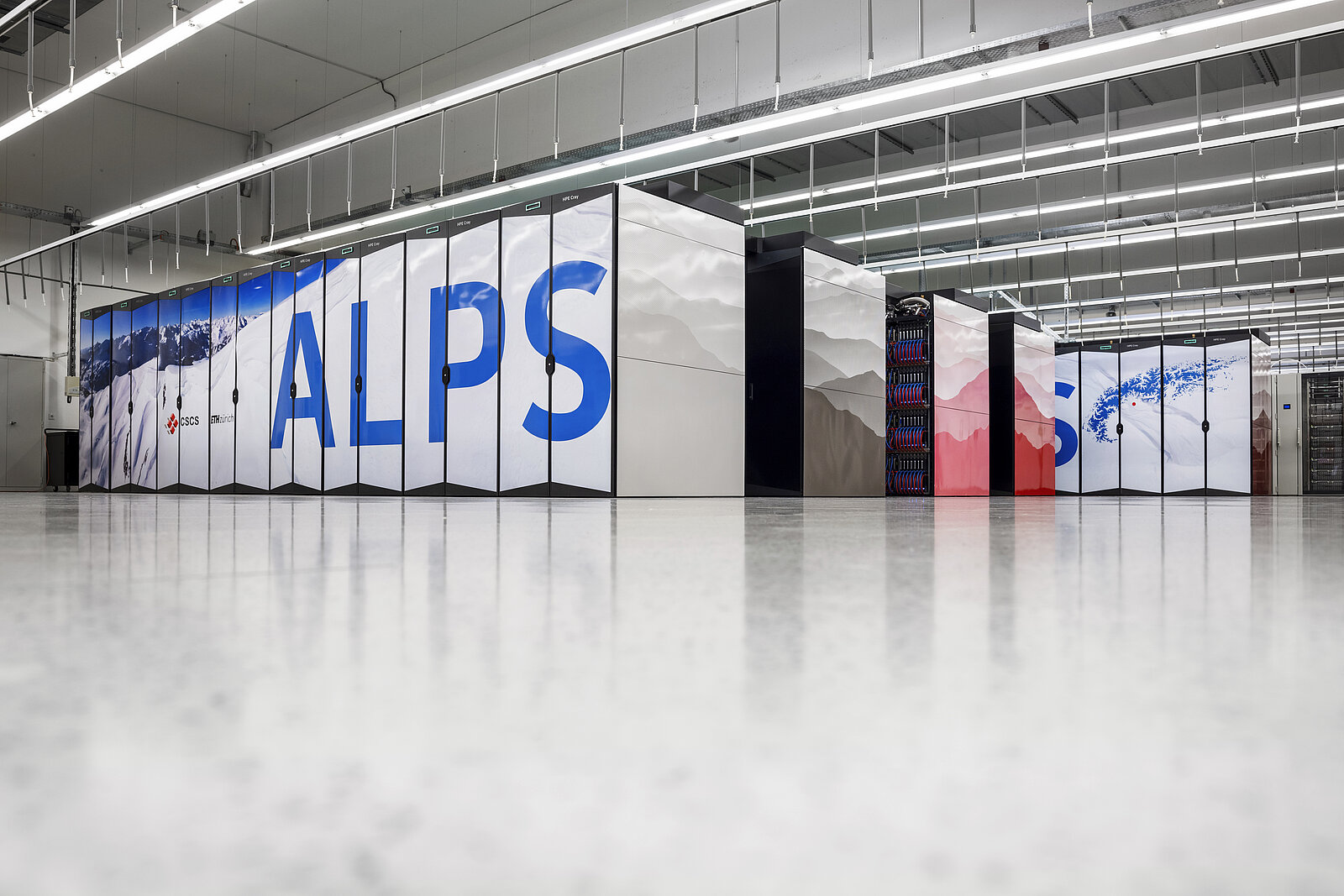
From agriculture and hydropower to protecting people from natural hazards such as floods, storms and landslides, accurate weather forecasts are essential to today's economy and society. These forecasts are typically generated using high-resolution weather and climate models, which use mathematical equations to simulate the complex processes taking place in the oceans and atmosphere. However, traditional models such as these require enormous computing power, making them both energy-intensive and time-consuming. Switzerland is no exception: MeteoSwiss uses the Alps supercomputer at the Swiss National Supercomputing Centre (CSCS) in Lugano to generate its weather forecasts.
In recent years, the data prepared for these traditional weather and climate models has also been used to develop AI models capable of forecasting the weather quickly and reliably, while requiring far less computing power and energy. “The use of AI-based methods in weather forecasting will continue to grow. In the future, these AI models could complement traditional models and enable reliable weather forecasting in regions where supercomputers are not available,” says Reto Knutti, Professor of Climate Physics and Director of the Center for Climate Systems Modeling (C2SM) at ETH Zurich.
Data: the foundation of climate research
Training AI-powered weather models reliably requires vast amounts of high-quality climate and Earth observation data. This is precisely where ETH Zurich comes in. Over the past few months, specialists at ETH Zurich and CSCS have copied around 100 petabytes of publicly available data from NASA to the CSCS – roughly equivalent to 20 million feature-length films. The datasets contain vital information about the Earth system, including greenhouse gases, clouds, precipitation and ice sheets. In the future, CSCS will also host copies of datasets from the National Oceanic and Atmospheric Administration (NOAA).
“Right from the start, it was important to compile an inventory of all the data that would give meaning to the six and a half billion files. This includes, for example, information on the mission, the time and location of the measurement, the file size and the format,” explains Rui Brandao, who led the operational side of the transfer with his team. The data copied and transferred to the CSCS is not a static snapshot, but is continuously updated as soon as NASA makes new data available online.
The United States has played a central role in Earth observation for decades. “Institutions such as NOAA and NASA operate extensive measurement programmes using satellites, balloons and monitoring stations. Without them, we would know far less about our planet today,” says ETH Professor Thomas Zurbuchen, who initiated the data transfer. However, recent cost-cutting efforts in the US have called the future of some data services into question. For the former NASA Chief Scientist, this provided further motivation to bring together important data at the CSCS in Lugano.
From data repository to research platform
However, the data collection is part of a broader strategy: ETH Zurich aims to more closely integrate data, the computing power of the “Alps” supercomputer and modern analytical methods. In the future, the data will not only be stored, but also processed so that researchers can analyse it using AI-based methods and train new AI models. “We want to make relevant climate and Earth observation data available at the CSCS so that researchers in Switzerland and around the world can make immediate use of it,” says CSCS Director and ETH Professor Thomas Schulthess.
Alongside C2SM, the new ETH Swiss GeoLab also plays a key role. This interdisciplinary centre of expertise for Earth observation is a new initiative that ETH will establish in Lucerne over the next ten years. One of the ETH Swiss GeoLab’s goals is to develop an AI model trained on large volumes of diverse geospatial data. These data come from satellites, drones, sensors, monitoring stations and other sources, enabling the model to interpret complex spatial relationships – for example, identifying which areas are particularly vulnerable to landslides and other mass movements. Eventually, this model will be made available to decision-makers, researchers and private companies.
Concrete examples illustrate the potential of such approaches: satellite images of the Nesthorn in Valais showed a gradual subsidence of the terrain as early as one year before a rockfall occurred. Such developments often remain unnoticed for a long time – but become visible when large volumes of data are analysed. “Never before has so much data been available – and never have the opportunities to derive tangible benefits been greater,” says ETH Professor Thomas Zurbuchen, Co-Director of the ETH Swiss GeoLab. The key now is not only to collect this data, but also to analyse it intelligently.
In Brief
- ETH Zurich has for several years taken a keen interest in publicly available Earth observation and climate data, with a view to using it to train AI models for improved weather forecasts and the early detection of natural hazards.
- To this end, it has, in recent months, copied publicly available data from NASA to the CSCS.
- The data is to be made available at the CSCS in such a way that researchers in Switzerland and around the world can make use of it.
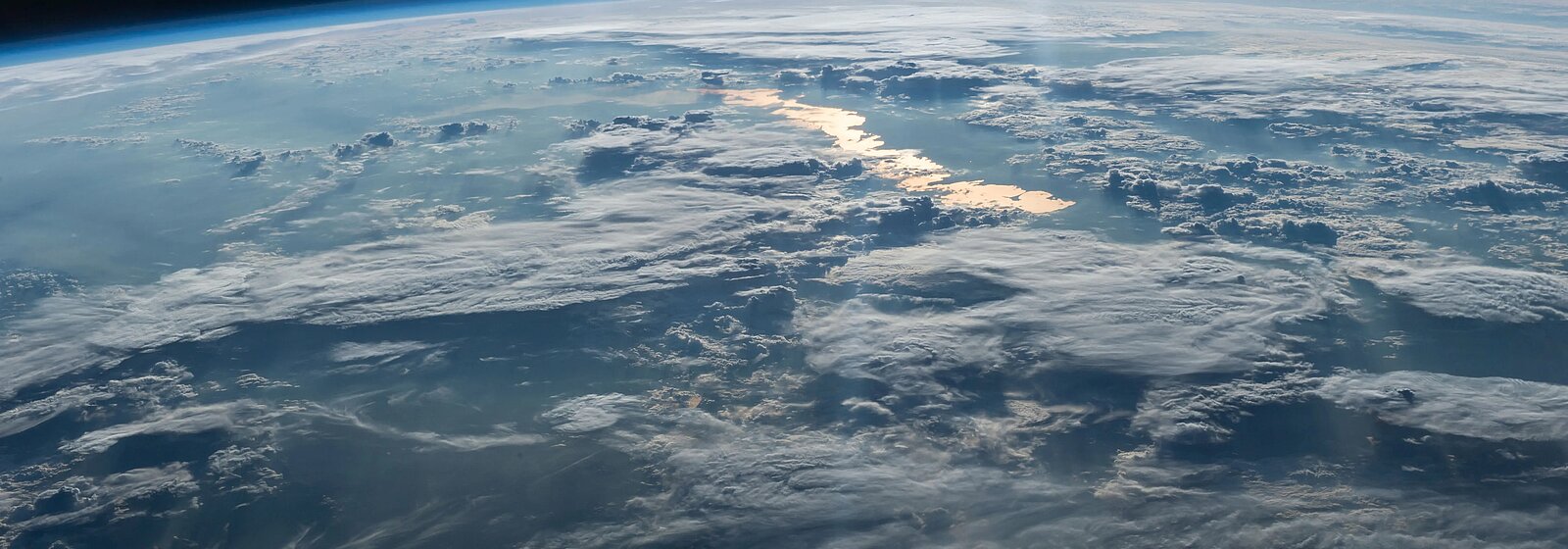
Photo Earth: NASA/ISS/Tim Kopra
Photo Alps: Marco Abram