May 13, 2026 – by Santina Russo
In recent decades, global warming has made heatwaves more frequent and more intense—not only in regions with temperate climates, but also in places where it’s usually extremely cold. Like in Antarctica. Scientists in Michael Lehning’s group at the WSL Institute for Snow and Avalanche Research SLF in Davos, Switzerland, together with colleagues from Europe and India, have now analysed one of the most severe Antarctic heatwaves in recent decades. Using simulations carried out on CSCS’s Alps supercomputer, the team investigated the role of human-made climate change in causing and amplifying this extreme weather event.
The heatwave took place in March 2022 in eastern Antarctica. Earth’s southernmost continent is almost entirely covered by ice, making it the coldest, driest, and windiest place on the planet. The average March temperature in coastal areas is about -10 °C, while the interior around the South Pole is much colder with temperatures dropping to -45 °C or below.
Heatwaves stir the perpetual cold
Already previously, in February 2020, the temperature at Esperanza research station in the northwest of the continent had reached 18.3 °C, breaking the Antarctic temperature record. Two years later, in February 2022, another heatwave set new local records in the same region and caused widespread surface melt. Then, barely one month later, between 17 and 19 March 2022, came the extraordinary heatwave the team has now analysed.
It was caused by a combination of La Niña conditions, tropical cyclones and a meandering jet stream, as a team of researchers from 14 countries, including Sergi Gonzàlez Herrero, Senior Scientist in Michael Lehning’s group at SLF, reported in 2024.
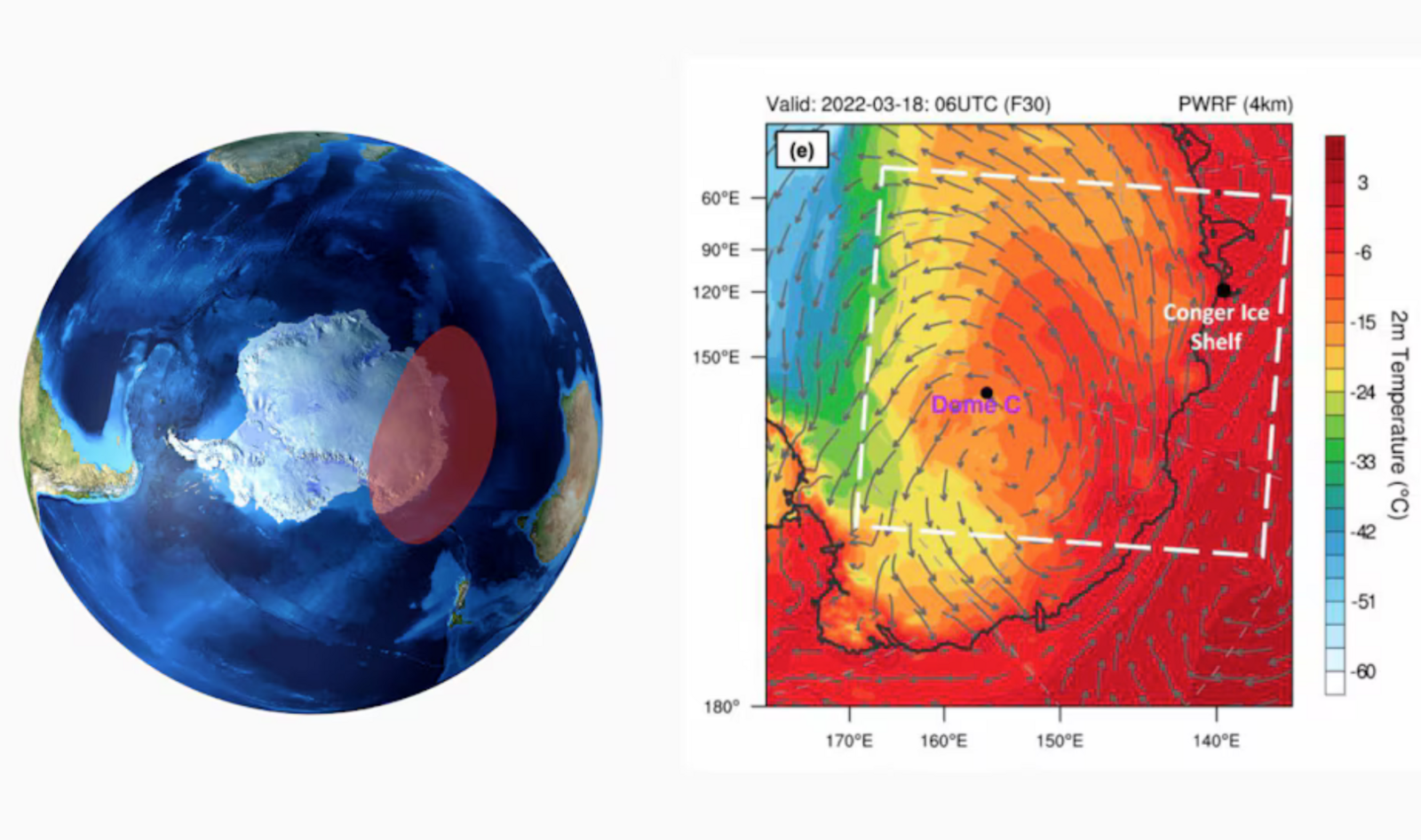
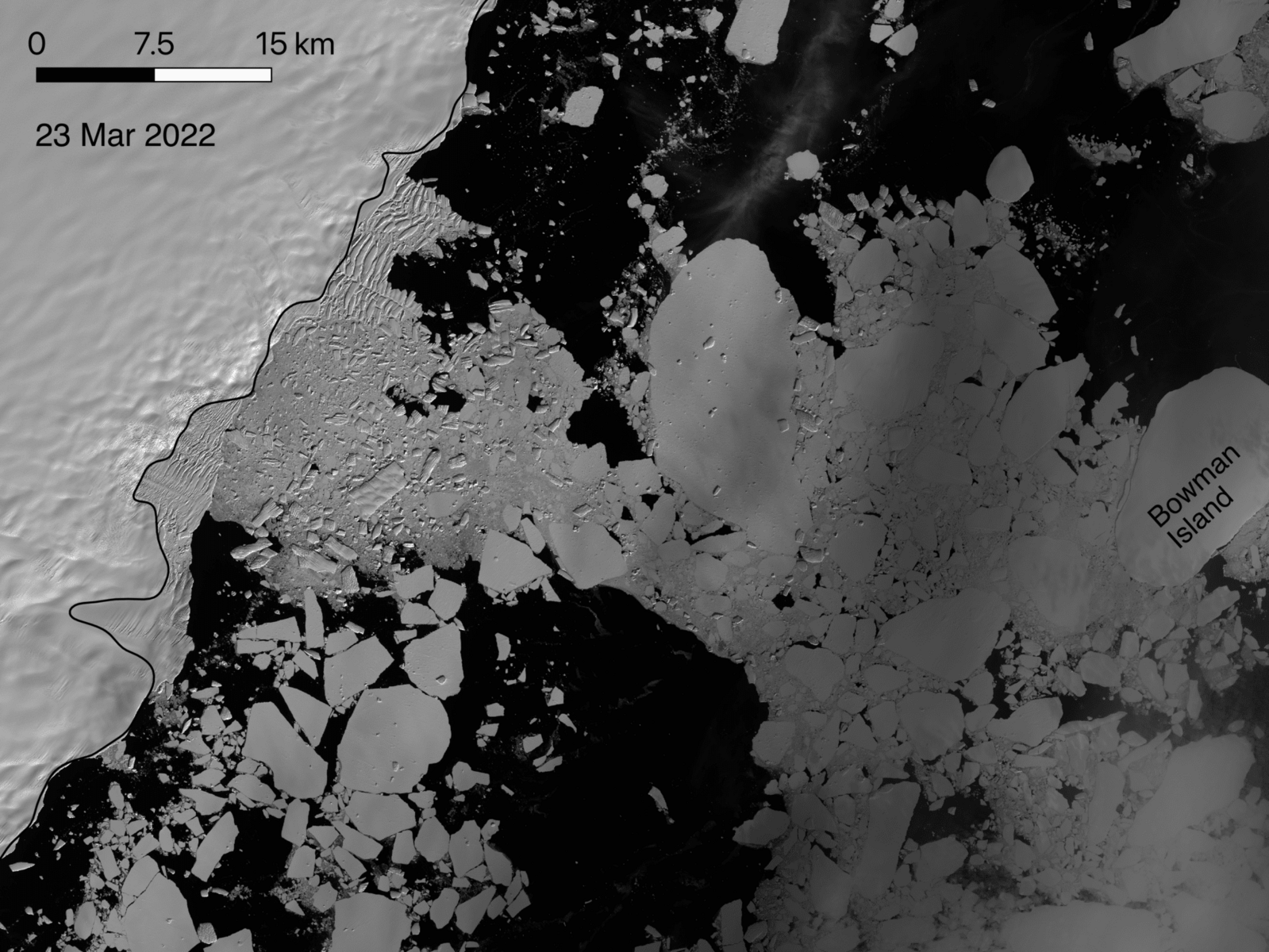
As a result, an estimated area of 3.3 million square kilometres across East Antarctica experienced temperatures up to 40 °C above normal, once again shattering temperature records. “This was the most intense heatwave ever recorded anywhere in the world,” says Gonzàlez Herrero. The event affected the Antarctic surface mass balance, and, together with a cyclone that developed during the heatwave, contributed to the final collapse of the Conger Ice Shelf, a glacier on the eastern cost of the continent that at the time still covered around 1200 square kilometres—almost the size of the Swiss canton of Aarau.
Simulations coupling snow and atmosphere
To investigate the origin and consequences of extreme heatwave in depth, he and his colleagues used CRYOWRF, a model that couples snow modelling with modelling of the global atmosphere.
The model includes detailed descriptions of the firn layer—the compacted snow between fresh snow and glacial ice, which forms when snow persists through the melt season, recrystallizes, and densifies under pressure—as well as blowing-snow processes. This allows it to capture key interactions between the snow and ice layers and the atmosphere. “Understanding these interactions is critical for understanding extreme events in Antarctica,” says Gonzàlez Herrero, who is the first author of the paper.
In high-resolution simulations carried out on the Alps supercomputer, the team explored climate scenarios over the region where the extreme heatwave occurred: a plateau called Dome C in south-eastern Antarctica. The team ran different climate storylines to determine how the heatwave was connected to human-made climate change. In these forced scenarios, they compared the present-day climate with pre-industrial conditions—that is, a climate without the fossil-fuel-driven CO2 emissions released since then. This allowed them to isolate the effects of human-made global warming on the analysed Antarctic heatwave.
Powerful radiation feedback
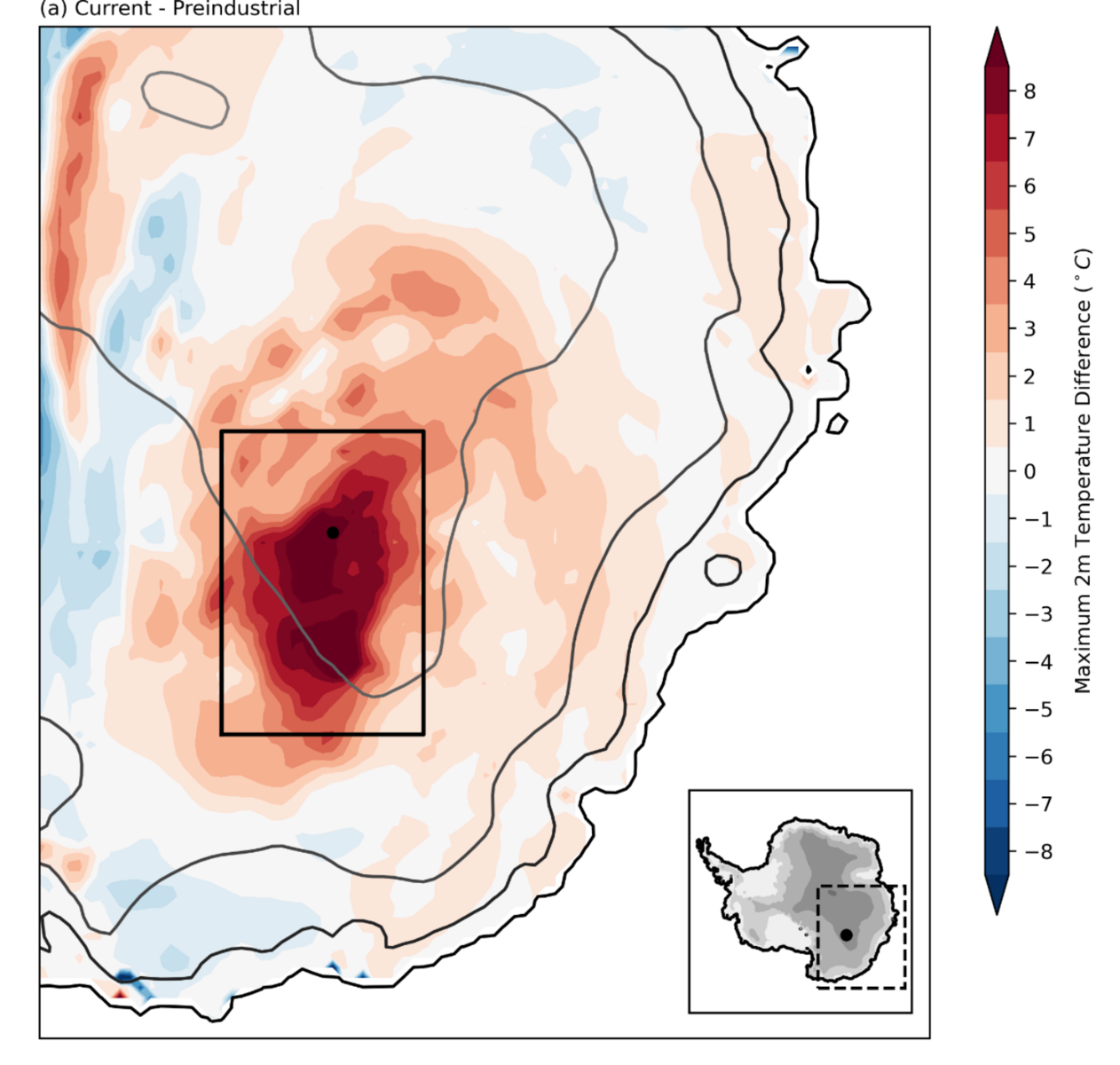
The team’s findings indicate that global warming greatly increased the heatwaves intensity. At the locations that experienced the strongest warming, temperatures were up to 10° C higher than they would have been in a climate without human-made global warming.
The researchers also show that a large part of the temperature rise was due to radiation feedback processes involving clouds and water vapour. For example, clouds and water vapour can reflect radiation back to Earth’s surface and thereby add to the temperature rise. At the same time, they can trigger further atmospheric processes that intensify the heat even more. “The impact we saw from these non-linear cloud and water-vapour feedbacks is noteworthy, because they are likely underrepresented in global climate models”, says Gonzàlez Herrero.
Over the entire Dome C region, the average increase in near-surface temperature was 5 °C compared to a pre-industrial climate. Of this warming, 3 °C resulted from cloud and water vapour radiation feedback processes. These feedback events can also destabilize the Antarctic firn, as team’s results indicate. “The firn content is a good indicator of the stability of the ice sheets,” explains Gonzàlez Herrero.
What’s more, future warming will very likely further intensify the temperature amplification caused by these feedbacks—particularly along the Antarctic coast, as the team’s projections for the end of the century show. There, melting processes are underway. When firn is destabilized and loses air content, however, meltwater can no longer percolate through it and instead forms ice lenses—pockets of ice within the firn. This, in turn, can destabilize the surrounding ice. Taken together, these melting conditions threaten to accelerate surface mass loss and destabilize adjacent ice shelves.
Insights to improve global climate models
This brings us back to the assumption that these radiation feedbacks are underrepresented in global climate models. In part, this is because they are non-linear: a small change can have a large effect, or it may have a small effect at first and then trigger a much larger response once a threshold is crossed. Another reason is that clouds are poorly represented at the coarse resolutions of most global climate simulations, Gonzàlez Herrero explains.
All of this means that the impacts extreme heatwaves actually have on Antarctica are probably also underrepresented in climate models. “That’s an important implication, as the evolution of Antarctic ice has a global impact,” says Gonzàlez Herrero. The fact that he and his colleagues have now identified this underrepresentation could help improve future global climate models. This way, a heatwave that hit the coldest continent may help researchers better understand how climate change affects the entire planet.
Reference:
S. González-Herrero, P. Deb, S Li, D. Argüeso, R. Engbers, M. Matějka, N. Wever, and M. Lehning: Impact attribution of the March 2022 Antarctic heatwave reveals amplification by cloud feedbacks and increased future meltwater. Commun Earth Environ (2026). DOI: https://doi.org/10.1038/s43247-026-03485-0
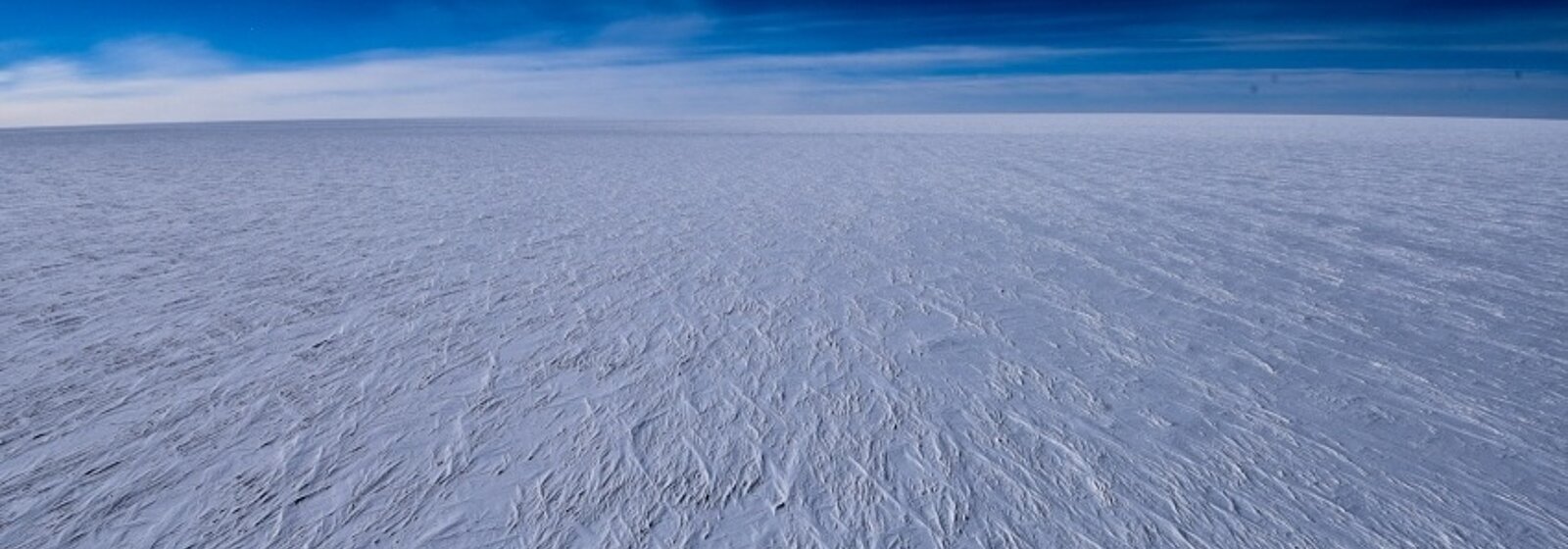
Cover Image: The Dome C plateau in Antarctica (Image Credit: White Mars, ESA)